Cheese and wine are a classic duo, but with so many styles of cheese, each with its own texture, flavour and intensity, knowing what wine to pour can be tricky. This guide breaks it down by cheese style and type, to help you build a better cheese board, plan a tasting that actually works or put together the perfect Christmas cheese board.
What wine goes with cheese?
The best wine depends on the style of cheese. Here are our top picks:
- Soft and bloomy cheeses: Champagne, an unoaked Chardonnay or a Sauvignon Blanc
- Fresh cheeses: a crisp white like Vermentino, Pinot Grigio or Assyrtiko
- Semi-hard cheeses: an oaked Chardonnay, a dry Riesling or a light Pinot Noir
- Hard cheeses: a Chianti, a Tempranillo or a Fino Sherry
- Blue cheeses: Sauternes, Port or another sweet wine
- Washed-rind cheeses: an aromatic white like Gewürztraminer or Pinot Gris
What are the golden rules for pairing wine and cheese?
A few simple rules will help you find a good match for almost any cheese:
- Match the intensity: delicate cheeses need delicate wines, while strong, aged cheeses can take bolder wines.
- White often beats red: the fresh acidity of white wine cuts through the fat of the cheese, while firm tannins, the drying compounds in red wine, can taste bitter and metallic with many cheeses. If you prefer red, choose a light, fruity one.
- Sweet loves salty: salty blue cheeses are delicious with sweet wines, like Stilton with Port or Roquefort with Sauternes.
- What grows together goes together: regional pairings rarely fail, like goat cheese with Sancerre, Comté with Jura wine or Manchego with Rioja.
What wine goes with soft and bloomy cheeses?
Brie
Rich, creamy and mild, Brie pairs beautifully with wines that refresh the palate. A crisp unoaked Chardonnay brings citrusy lift, while Champagne or traditional-method sparkling wine cuts through the creaminess with bubbles and acidity.
Camembert
Slightly earthier than Brie, Camembert works well with both whites and light reds. Try a Sauvignon Blanc for a fresh, herbal contrast or a Beaujolais for a juicy red that won’t overpower the cheese’s delicate funk.
Goat cheese (chèvre)
Tangy and often herbaceous, goat cheese is a natural partner for Sauvignon Blanc, especially from the Loire Valley, like a Sancerre. The wine’s zesty acidity balances the cheese’s sharpness. For a red option, a light Pinot Noir or a dry rosé also work well.

What wine goes with fresh cheeses?
Ricotta
Mild and fresh, ricotta goes well with light whites like Pinot Grigio or Vermentino. If you’re serving it in a dessert, a lightly sparkling wine like Prosecco is a perfect match.
Mascarpone
Luxuriously rich, mascarpone pairs well with sweet wines, especially Moscato d’Asti or Sauternes, when served in desserts like tiramisu. Discover more sweet wines in our guide to dessert wine.
Mozzarella
Fresh mozzarella is soft and milky, and pairs best with crisp whites. Vermentino, Falanghina or a light Chardonnay work well, especially alongside tomato and basil in a Caprese salad. For a red pairing, Chianti complements it nicely in cooked dishes like pizza or lasagna.
Burrata
Richer and creamier than mozzarella, burrata has a delicate outer shell with a luscious, stracciatella-filled centre. It pairs beautifully with crisp, Mediterranean whites like Vermentino or Falanghina, or a dry Chenin Blanc. If served with tomatoes or grilled vegetables, try a dry rosé or a chilled light red like Frappato.
Feta
Salty and tangy, feta pairs wonderfully with Assyrtiko, a crisp Greek white with citrus and minerality. If you’re serving it with roasted vegetables or grains, a light Pinot Noir can also work.

What wine goes with semi-hard cheeses?
Gruyère
Nutty, creamy and slightly sweet, Gruyère loves an oaked Chardonnay for a rich match, or a dry Riesling for something more refreshing. A light Pinot Noir also works, especially with aged Gruyère.
Emmental
With its gentle nutty flavour, Emmental is lovely with a dry Riesling or a soft, fruity Pinot Noir.
Comté
Aged and complex, Comté pairs beautifully with white Burgundy, a Vin Jaune from the Jura, or even a Merlot with soft tannins and fruit.
Cheddar
Sharp, aged Cheddar needs structure, and Cabernet Sauvignon is a classic pairing. Zinfandel is another great option, especially with smoked or spicy Cheddar. Younger Cheddars can work with Chardonnay or Syrah.
Gouda
Nutty and slightly caramelised, Gouda pairs beautifully with Merlot or Chardonnay. For aged Gouda, try a Malbec or a Zinfandel.
Edam
Mild and a little salty, Edam matches nicely with an off-dry Riesling or a light-bodied Pinot Noir.
Fontina
Creamy and nutty, Fontina is a classic match for Barbera, a soft and juicy Italian red. An unoaked Chardonnay also pairs well.
Provolone
With its slight tang and occasional smokiness, Provolone is great with a rustic Chianti or a medium-bodied Sangiovese.
Havarti
Mild and buttery, Havarti pairs easily with a slightly sweet Gewürztraminer or a clean Pinot Grigio.
Monterey Jack
Creamy and mild, it works well with a soft Chardonnay, and for contrast, a fruit-forward Zinfandel adds a nice lift.

What wine goes with hard cheeses?
Parmesan (Parmigiano-Reggiano)
Salty, umami-packed and granular, Parmesan pairs beautifully with Chianti or Barolo, as both offer enough acidity and tannin to stand up to its bold flavour. For contrast, try Prosecco: the bubbles cleanse and refresh.
Pecorino Romano
Firm and salty, this sheep’s milk cheese shines with Montepulciano d’Abruzzo, Chianti or a crisp, citrusy Vermentino.
Asiago
Nutty and savoury, Asiago works with a smooth Pinot Noir or a zingy Sauvignon Blanc.
Manchego
Spain’s most famous cheese is nutty and firm, and loves a young Tempranillo, such as a Rioja: a classic pairing. For something different, try Fino Sherry or Amontillado, especially with older Manchego.

What wine goes with blue cheeses?
Roquefort
Salty, tangy and intense, Roquefort pairs best with Sauternes or other late-harvest sweet wines. Port is also a beautiful match: rich, sweet and bold enough to hold its own.
Gorgonzola
Dolce (creamy) styles match well with Moscato or Sauternes, while the more intense Piccante style can handle Cabernet Sauvignon, Zinfandel or a spicy Dolcetto.
Stilton
A British classic that pairs perfectly with Port or Madeira. The contrast of sweet and savoury is hard to beat.
Danish Blue (Danablu)
Sharp and salty, this works well with a late-harvest Riesling or a nutty Oloroso Sherry.
Cabrales
Powerfully pungent, this Spanish blue pairs best with Pedro Ximénez Sherry or a rich, sweet Port.
Maytag Blue
Creamy and tangy, Maytag Blue can go bold with Zinfandel, or sweet with a Sauternes.

What wine goes with washed-rind cheeses?
Morbier
This semi-soft cheese from France is known for the distinctive line of ash running through its centre. With its earthy aroma and smooth, slightly nutty flavour, Morbier pairs well with Jura whites like Savagnin or Chardonnay, or a light red such as Poulsard or Trousseau. These wines complement its rustic character without overpowering it.
Époisses, Taleggio, Munster, Limburger
These pungent cheeses are creamy, savoury and famous for their smell. Pair them with aromatic whites like Gewürztraminer, Pinot Gris or Savagnin from the Jura. These wines offer floral, spicy and mineral notes that hold up to the cheese’s intensity without clashing.

What wine goes with smoked, spreadable and grilled cheeses?
Smoked Gouda, smoked Cheddar, Scamorza Affumicata
Smoked cheeses offer toasty, earthy flavours that shine with bold reds like Syrah, Tempranillo or Cabernet Franc. These wines echo the cheese’s depth while adding fruit and spice.
Boursin, cream cheese and spreads
Soft, mild cheeses benefit from aromatic, refreshing wines. Try Chenin Blanc, off-dry Riesling or a lightly sparkling Prosecco. The wines cut through creaminess while adding zest.
Halloumi, Scamorza, paneer
These cheeses are often served warm, grilled or pan-fried. Their firm, salty character pairs well with zippy whites like Assyrtiko, Txakoli or a dry rosé.

How do you choose wine for a cheese board?
How many wines should you serve?
You don’t need a different wine for every cheese. Two or three bottles are usually enough to cover a whole board:
- A sparkling wine or a crisp white, for fresh, soft and goat cheeses
- A light, fruity red, like a Pinot Noir or a Beaujolais, for semi-hard cheeses
- A sweet or fortified wine, like Port or Sauternes, for blue cheeses
Start with the mildest cheeses and wines, and finish with the strongest, so nothing overpowers what comes next.
Christmas cheese board
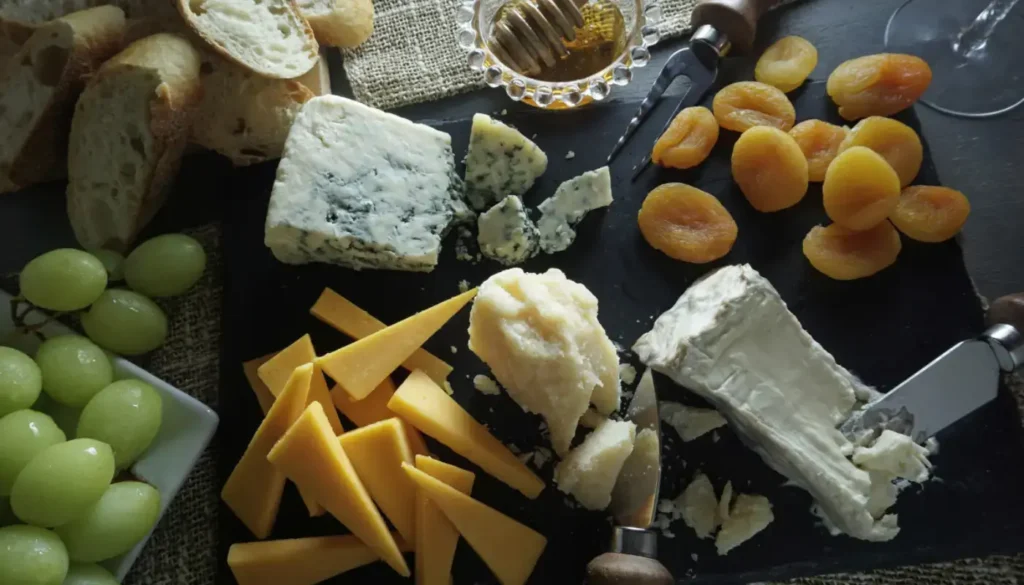
A Christmas cheese board usually includes a Brie or Camembert, a mature Cheddar or Comté, a goat cheese and, of course, a Stilton. Open a bottle of Champagne or English sparkling wine to start, a white Burgundy or a Jura Chardonnay for the creamy and nutty cheeses, and finish with a glass of Tawny or Late Bottled Vintage Port with the Stilton. Not sure which bubbles to choose? See our guide to Champagne vs Prosecco, and for the rest of the meal, our Christmas wine pairing guide.
What wine goes with cheese dishes?
Cooking with cheese? Melted cheese changes the pairing, as it feels richer and saltier. See our guide to wine with winter cheese dishes, from raclette to tartiflette, and our fondue pairing guide for cheese, meat and chocolate fondue.
FAQ
Is red or white wine better with cheese?
White wine is usually the safer choice, as its acidity cuts through the fat and it has no tannins to clash with the cheese. Red wine works best with hard, aged cheeses, as long as it’s not too tannic.
What’s the best wine for a cheese board?
A dry sparkling wine like Champagne is one of the most versatile choices, as it works with soft, fresh and hard cheeses. Add a Port if your board includes blue cheese.
What wine goes with Stilton?
Port is the classic match for Stilton, especially a Tawny or a Late Bottled Vintage. A sweet Madeira or a Sauternes is also delicious.
What cheese goes with Champagne?
Soft, creamy cheeses like Brie, Camembert and Chaource are lovely with Champagne, as are aged hard cheeses like Parmesan and Comté.