Popping a cork is part of the fun of any celebration, but a flying cork or a fountain of foam can quickly spoil the moment. The good news is that opening Champagne safely is easy once you know how. Here’s everything you need, step by step, from chilling the bottle to pouring the perfect glass.
What do you need to open a bottle of Champagne?
You don’t need any special equipment, just a little preparation:
- A well-chilled bottle: cold Champagne is calmer and easier to open
- A clean tea towel or napkin: for a better grip and to catch the cork
- Your glasses ready: so you can pour straight away
- A steady surface: and nobody standing in front of the bottle
Why does Champagne need to be cold before opening?
A bottle of Champagne is under a lot of pressure: around 5 to 6 atmospheres, more than twice the pressure in a car tyre. That pressure comes from the second fermentation in the bottle, the step that gives traditional-method sparkling wine its bubbles.
The colder the wine, the more the bubbles stay dissolved, so a cold bottle is less likely to foam over or send the cork flying. Aim for around 6–10°C, the ideal serving temperature for sparkling wine. That’s about 3 hours in the fridge, or 20 to 30 minutes in an ice bucket filled with ice and water.
How do you open Champagne, step by step?
1. Remove the foil
Peel off the foil covering the cork, using the little tab if there is one. Dry the bottle if it has been in an ice bucket, so it doesn’t slip.
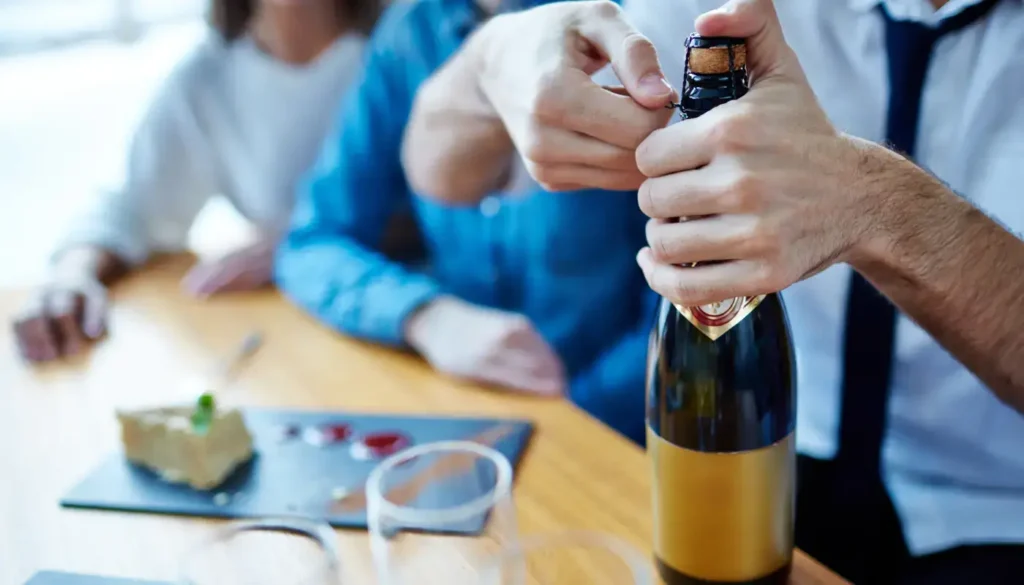
2. Loosen the cage, keeping your thumb on the cork
The wire cage holding the cork is called a muselet. Place your thumb firmly on top of the cork, then untwist the little wire loop: it usually takes six half-turns. Keep your thumb on the cork from now on, as it can start to move on its own once the cage is loose. Most people leave the cage on, as it gives you a better grip.
3. Tilt the bottle at 45°
Hold the bottle at an angle of about 45°, pointing away from people, windows and anything fragile. The angle gives the wine more surface area, which helps the pressure escape gently instead of foaming out of the neck.
4. Hold the cork and turn the bottle
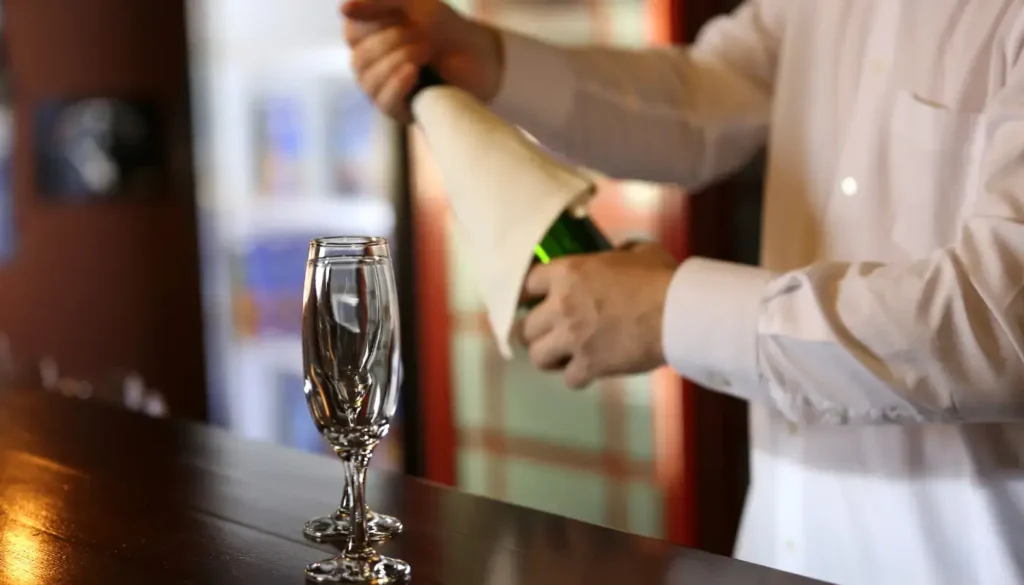
Cover the cork with your tea towel and hold it firmly in one hand. With the other hand, hold the base of the bottle and slowly turn the bottle, not the cork. Turning the bottle gives you much more control.
5. Ease the cork out with a sigh, not a pop
As the cork starts to move, push gently against it to slow it down. Let it come out slowly, with a soft sigh. Keep the bottle tilted for a few seconds, then pour.
How do you pour Champagne without it overflowing?
Pour slowly, in two goes. Fill each glass about a third of the way, wait a few seconds for the foam to settle, then top it up to about two-thirds full. Tilting the glass slightly as you pour also helps, especially with very fizzy wines.
Choose tulip-shaped glasses or flutes rather than wide coupes, which let the bubbles and aromas escape quickly. Of all the types of wine glasses, a tulip is the best all-rounder for sparkling wine.
What should you avoid when opening Champagne?
A Champagne cork can fly out at high speed, so a few simple rules keep everyone safe:
- Never point the bottle at anyone, including yourself
- Don’t shake the bottle, and let it rest for a while if it has just been carried around
- Never take the cage off without holding the cork
- Don’t use a corkscrew: the pressure can push the cork out suddenly
- Avoid opening a warm bottle, which will foam much more
What if the Champagne cork is stuck?
Some corks are very tight, especially on older bottles. Wrap the tea towel around the cork for a better grip and keep turning the bottle gently. If it still won’t move, Champagne pliers, a small tool that grips the top of the cork, give you extra leverage. Never use a knife or anything sharp to lever the cork out.
Can you sabre a bottle of Champagne?
Sabrage, or opening a bottle with a sabre, is a spectacular tradition that dates back to Napoleon’s time. The blade slides along the bottle and breaks off the top of the neck, cork and all. It looks impressive, but it involves broken glass and a lot of force, so it’s best left to people who have been properly trained. If you want to try it, do it outdoors, well away from other people.
How do you keep Champagne fizzy once opened?
If you don’t finish the bottle, close it tightly with a proper sparkling wine stopper and keep it in the fridge. The cold helps the bubbles stay in the wine, and the stopper keeps the pressure in. It will stay fresh and fizzy for 1 to 3 days, a little less than most opened still wines.
Opening a bottle to see in the new year? It’s the perfect excuse for smoked salmon blinis, oysters or a Kir Royale: here are the best wines for New Year’s Eve and what to serve with them.
FAQ
Should Champagne go pop?
Not really. A loud pop means the cork came out too fast, which wastes wine and can be dangerous. A gentle sigh is the sign of a bottle opened properly.
Can you open Champagne with a corkscrew?
No, as the pressure in the bottle can push the cork out suddenly. Champagne corks are designed to be removed by hand.
Does a spoon in the bottle keep Champagne fizzy?
No, it’s a myth. In a 1994 study in Champagne, bottles with a spoon in the neck lost their bubbles as quickly as open bottles, while bottles sealed with a stopper stayed much livelier.
Do you open Prosecco and Cava the same way?
Yes. Cava, Crémant and English sparkling wine are made the same way as Champagne, so treat them exactly the same. Prosecco is made in large tanks and is usually under a little less pressure, one of the key differences between Champagne and Prosecco, but the same steps apply.