The right glass can make a good wine taste even better. But with so many shapes on the shelves, from tall Bordeaux bowls to tulip-shaped sparkling glasses, it’s hard to know which ones you actually need. Here’s a simple guide to the main types of wine glasses, what each one does, and how to choose the best set for your home.
This article contains affiliate links. If you buy through them, Wine Lees may earn a small commission at no extra cost to you. Find out more.
Does the shape of a wine glass matter?
Wine glasses aren’t just about aesthetics – the shape influences aroma, flavour, acidity, and even how the wine flows across your palate.
Different styles emphasise different characteristics:
- Wider bowls enhance aromatics and soften tannins.
- Narrower bowls preserve freshness and acidity.
- Tall, slim shapes help maintain bubbles in sparkling wines.
You absolutely don’t need a full cupboard of specialised glasses – a couple of well-chosen shapes will work for 99% of wines.

What are the different types of wine glasses?
Here’s a quick guide to which glass to use for each style of wine:
| Wine style | Recommended glass | Shape features |
|---|---|---|
| Full-bodied reds Cabernet Sauvignon, Merlot, Syrah, Malbec | Bordeaux glass | Large, tall bowl |
| Aromatic reds Pinot Noir, Nebbiolo, Barbera | Burgundy glass | Very wide bowl |
| Light–medium whites Sauvignon Blanc, Pinot Grigio, Albariño, Riesling | Standard white glass | Medium, narrower bowl |
| Full-bodied whites Chardonnay, Viognier, oaked whites | Larger white glass | Slightly bigger bowl |
| Rosé wines | Rosé glass | Medium bowl, tapered rim |
| Sparkling wines Champagne, Prosecco, Cava, Crémant | Tulip glass | Tall, narrow bowl that widens slightly |
| Dessert wines Sauternes, Port, Ice Wine, Tokaji | Small dessert glass | Tiny bowl, narrow rim |
| Sherry Fino, Manzanilla, Amontillado | Copita | Small tulip-shaped bowl |
| Everyday use | Universal glass | Medium bowl, tapered shape |
Bordeaux glass
The Bordeaux glass has a large, tall bowl, designed for full-bodied reds like Cabernet Sauvignon, Merlot, Syrah and Malbec. The tall bowl directs the wine to the back of the mouth, balancing tannins and showcasing dark fruit flavours. Its size also lets plenty of oxygen reach the wine, helping it open up.
Burgundy glass
The Burgundy glass has a very wide, rounded bowl that maximises aeration and channels delicate aromas towards the nose. It’s perfect for aromatic reds with softer tannins, like Pinot Noir, Nebbiolo and Barbera.
White wine glass
A standard white wine glass has a medium, narrower bowl, which keeps the wine cool and preserves its acidity and freshness. Use it for crisp, light whites like Sauvignon Blanc, Pinot Grigio, Albariño and dry Riesling.
Large white wine glass
Fuller whites like Chardonnay, Viognier and other oaked wines need a slightly bigger bowl. A bit more space allows richer aromas, like butter, vanilla and toast, to open up without losing structure.
Rosé glass
Rosé sits between white and red, and so does its ideal glass. A medium bowl with a slightly tapered rim keeps the wine fresh while enhancing its delicate red fruit notes, whether you’re pouring a pale Provence rosé or a fruitier style.
Tulip glass
The tulip glass is the best choice for Champagne, Prosecco, Cava and Crémant. Its tall, narrow bowl keeps the bubbles lively, while the slightly wider middle lets the aromas open up. Not sure which bubbles to pour? See our guide to Champagne vs Prosecco.
Flute and coupe
The classic flute looks elegant, but it’s too narrow to let the aromas develop. The coupe, with its wide, shallow bowl, looks fun in old movies, but the bubbles disappear almost instantly. Both work for a party, but a tulip glass will always show the wine at its best.
Dessert wine glass
Dessert wines are served in small pours, so a small glass with a tiny bowl and a narrow rim works best. It concentrates rich, sweet aromas without overwhelming the palate, perfect for Sauternes, ice wine and Tokaji. Discover which sweet wines to try in our guide to dessert wine.
Port and Sherry glasses
Fortified wines are stronger, so they’re served in even smaller measures. A small Port glass works well, while Sherry is traditionally served in a copita, a small tulip-shaped glass that concentrates its nutty aromas. Find out more in our guide to Port.
ISO tasting glass
The ISO glass is the standard tasting glass used in wine courses, like the WSET, and in many wine competitions. Small and egg-shaped, it’s designed to show every wine fairly, so it’s a great choice if you want to compare wines side by side. Learn more in our guide on how to taste wine.
What is a universal wine glass?
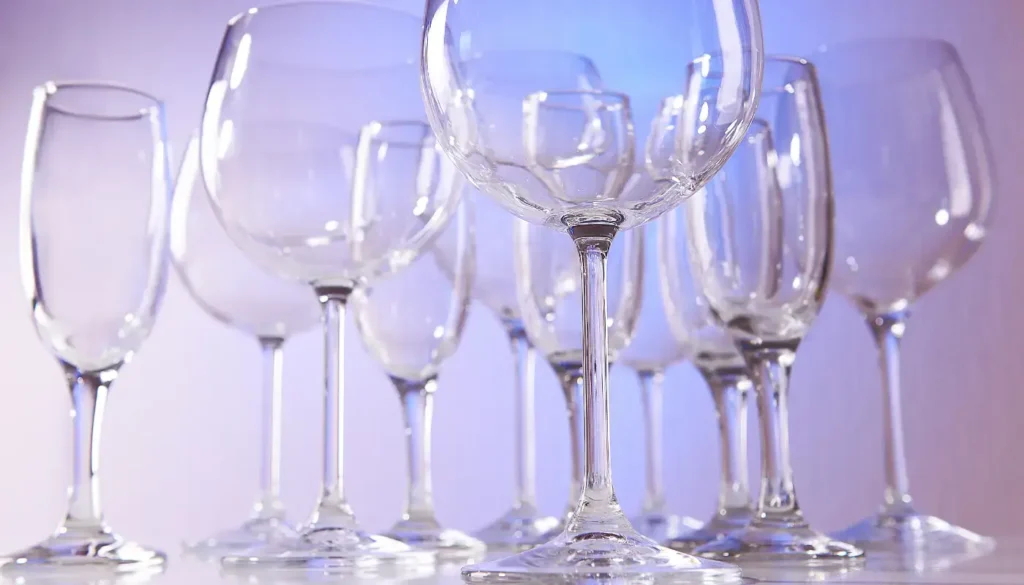
A universal wine glass is designed to work with almost every style of wine. Its medium-sized bowl is wide enough to let reds breathe, while its slightly narrower rim keeps whites fresh and holds on to the bubbles in sparkling wine. If you only want to buy one set of glasses, this is the one to choose.
See our favourite universal glasses below.
What are the best wine glasses to buy?
You don’t need expensive glasses – just well-designed ones. Whatever your budget, look for a thin rim, which feels elegant and lets the wine flow smoothly, and clear, uncoloured glass, so you can see the wine’s colour. A bowl that tapers towards the top also helps capture the aromas. In fact, switching from thick-rimmed glasses to thin ones is the biggest upgrade you can make. Here are our picks for every budget and need.
Best budget wine glasses
For daily use, look for a sturdy, dishwasher-safe glass with a medium bowl and a fairly thin rim. A set of four or six universal glasses at a modest price will cover almost every wine. Schott Zwiesel and Spiegelau both make affordable, durable sets that are great for everyday drinking.
Best mid-range universal glasses
A mid-range universal glass is the best value for money: light, thin and versatile enough for every bottle, but sturdy enough for everyday use. Zwiesel Glas, Riedel and Lehmann all make excellent versions, and many are dishwasher-safe.
Best premium wine glasses
For special bottles, a premium glass is incredibly light and thin, and makes every sip feel like an occasion. The Jancis Robinson glass, designed by the wine writer with glassmaker Richard Brendon, Zalto and Gabriel Glas are among the most admired. They’re more fragile and more expensive, so keep them for your best wines.
Best stemless wine glasses
Great for parties and picnics, a good stemless glass should still have a tapered bowl and a thin rim.
Best sparkling wine glasses
Look for a tulip shape with a fine rim, sold in sets of four or six.
Crystal or glass: which is better?
Crystal glasses can be made much thinner than regular glass, which gives them a finer rim and a lighter feel in the hand. Most modern crystal is lead-free, and many brands are now dishwasher-safe. Regular glass is cheaper and sturdier, so it’s a better choice for everyday use or for big gatherings.
Stemmed or stemless wine glasses?
A stem lets you hold the glass without warming the wine with your hand, and makes it easier to see the colour and swirl. Stemless glasses are more practical and less fragile, but the wine warms up faster. If you prefer stemless, serve the wine slightly cooler than usual to compensate. Our wine serving temperature guide has the ideal temperature for every style.
How many wine glasses do you need?
You don’t need a full set for every grape. For most homes, two or three shapes are plenty:
- A universal glass for most reds, whites and rosés
- A larger red wine glass, if you often drink full-bodied reds
- A tulip glass for sparkling wine
Wine glasses also make a lovely present: see our wine gift ideas for more inspiration.
How do you care for wine glasses?
- Hand-wash if possible using warm water and no scented soap.
- Avoid the dishwasher for very delicate glasses.
- Polish with a microfibre cloth while the glass is slightly warm.
- Hold by the bowl when drying to avoid snapping the stem.
For more tips on serving wine at its best, see our guides on how to serve wine and how to taste wine.
FAQ
How full should you fill a wine glass?
Fill a red or white wine glass to about a third, at the widest part of the bowl. This leaves room to swirl and lets the aromas gather.
Do you need different glasses for red and white wine?
Not necessarily: a good universal glass works well for both. If you drink a lot of full-bodied reds, a larger red wine glass is a nice addition.
Are expensive wine glasses worth it?
A thinner, well-shaped glass can genuinely make wine taste better, but you don’t need to spend a fortune. A good mid-range universal glass makes the biggest difference for the price.