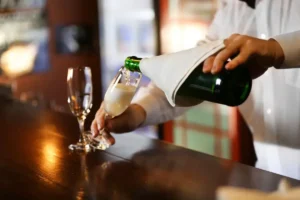
Serving wine might seem simple: open the bottle and pour. But the temperature, the glass and even the way you pour can change how a wine tastes and smells. Here’s how to serve wine properly, from chilling and opening the bottle to decanting, pouring and keeping it at its best through the meal.
This article contains affiliate links. If you buy through them, Wine Lees may earn a small commission at no extra cost to you. Find out more.
What temperature should you serve wine at?
Temperature can make or break a wine. Too cold and the flavours disappear; too warm and the alcohol dominates. As a rule of thumb:
- Sparkling wines: well chilled, around 6-10°C
- Light whites and rosé: 7-10°C
- Full-bodied whites: 10-13°C
- Light reds: 12-14°C
- Medium to full-bodied reds: 15-18°C
If your red feels warm, pop it in the fridge for 15 to 20 minutes before serving. If your white is too cold, let it warm up in the glass for a few minutes. Each style has its own ideal serving temperature, from Champagne to Port.
Which glass should you use for wine?
The glass changes how a wine smells and tastes. Its shape, size and rim all affect how the aromas are released and where the wine lands on your palate. In general:
- Sparkling wines: flutes or tulip-shaped glasses keep the bubbles and focus the aromas
- White wines: smaller, narrower glasses keep the wine cool and concentrate the aromas
- Red wines: larger, rounder bowls let air soften the tannins and open up the aromas
- Dessert and fortified wines: small glasses, as they’re served in smaller amounts
If you’re buying new glasses, a good all-purpose glass works for most wines. Each of the types of wine glasses has its own strengths, from large red wine bowls to the tulip.
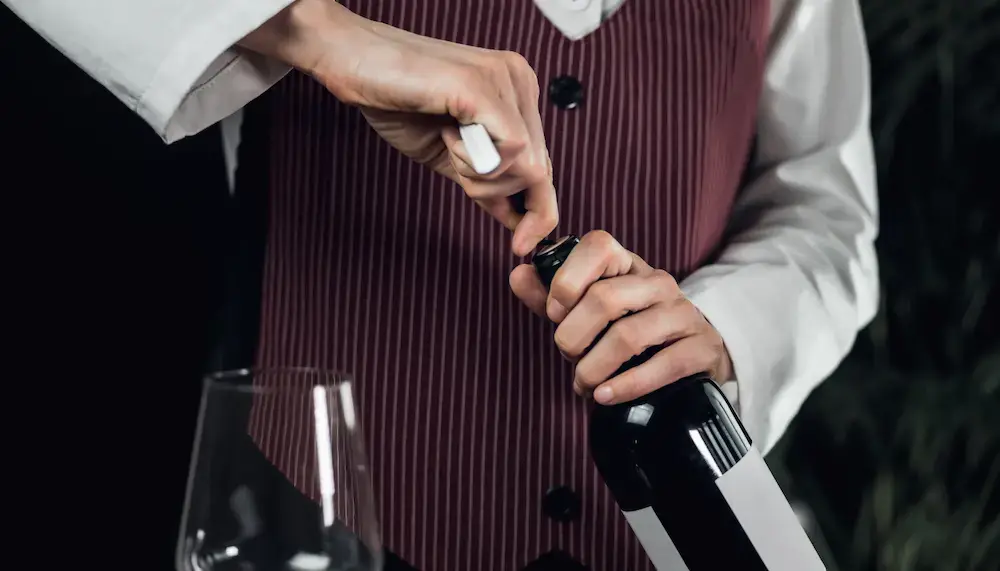
How do you open a bottle of wine?
Still wine
- Use a waiter’s corkscrew: its small knife, screw and lever give you plenty of control
- Cut the foil just below the lip of the bottle
- Insert the screw slightly off-centre, twist it in, and lever the cork out gently
- Wipe the neck to remove any dust or residue before pouring
For a screw cap, simply hold the cap firmly and twist the bottle.
Sparkling wine
Chill the bottle well, as cold wine is under less pressure. Keep your thumb on the cork as you loosen the cage. Then hold the cork and turn the bottle slowly, so the cork comes out with a sigh, not a pop. Knowing how to open Champagne safely avoids flying corks and wasted wine.
What if the cork breaks?
Insert the corkscrew again at an angle into the piece left in the neck and pull gently. If the cork crumbles or falls into the bottle, don’t worry: it won’t spoil the wine. Pour it through a fine strainer to catch any bits.
With older bottles, the cork is often soft and crumbly, so a two-prong cork puller, also called an Ah-So, is a safer choice. Its two thin blades slide down between the cork and the glass. You can then twist the cork out in one piece, without piercing it.
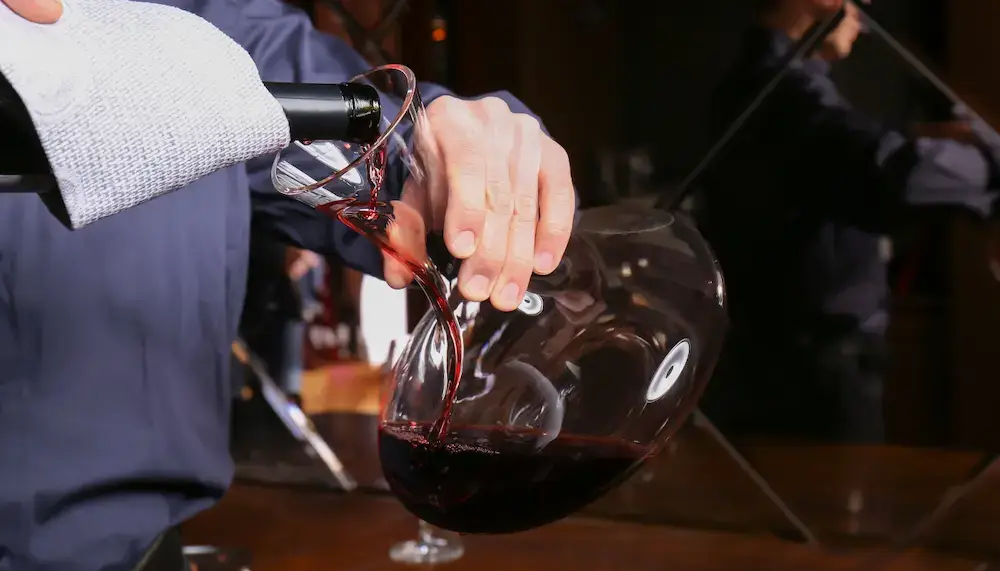
Should you decant wine?
Decanting means pouring wine from the bottle into a decanter. It gives the wine air, which softens the tannins and opens up the aromas, and it separates an older wine from its sediment.
Which wines need decanting?
- Young, powerful reds, like Cabernet Sauvignon or Syrah, often benefit from 30 to 60 minutes in a decanter
- Older reds should only be decanted to remove the sediment, and served soon after, as their delicate aromas fade quickly
- Vintage Port throws a heavy sediment, so it almost always needs decanting, like many traditional styles of Port
- Whites rarely need it, although a full-bodied oaked Chardonnay can open up in a larger glass
Lighter reds and fresh whites are usually best straight from the bottle.
How to decant a wine
For an older bottle, stand it upright for a day before opening, so the sediment settles at the bottom. Pour slowly and steadily into the decanter, in one movement, with a light under the neck of the bottle. Stop as soon as you see the sediment reach the neck.
How do you pour wine?
- Hold the bottle at the base and pour smoothly, without splashing
- For still wines, twist the bottle slightly at the end to avoid drips
- For sparkling wines, pour slowly along the inside of the glass to keep the bubbles
How much wine should you pour?
Fill glasses of still wine only about a third full. This leaves room to swirl the wine and release its aromas. For sparkling wine, pour a little, let the foam settle, then top up to about two-thirds full.

In what order should you serve wines?
If you’re opening several bottles, a few simple rules help each wine show at its best:
- Light before full-bodied, so a big red doesn’t overpower a delicate white
- White before red, in most cases
- Dry before sweet, as a sweet wine makes a dry one taste sharp
- Young before old, so the older wine can shine at the end
Sparkling wine is the exception: whether you choose Champagne or Prosecco, it’s perfect to start, but also works throughout the meal.
How do you keep wine at the right temperature during a meal?
Keep whites, rosés and sparkling wines in an ice bucket filled with ice and water between pours. If the room is warm, put reds back in the fridge for a few minutes, as they warm up quickly in the glass and on the table.
FAQ
How many glasses are in a bottle of wine?
A standard 75cl bottle holds six 125ml glasses. In a pub or restaurant, wine is also served in larger 175ml and 250ml glasses, so a bottle gives around four or three glasses.
Should red wine be served at room temperature?
Not quite. “Room temperature” dates from cooler houses, and most reds taste best slightly cooler, at 15-18°C.
Do you need to let wine breathe?
Only some wines. Young, tannic reds benefit from breathing in a decanter, but simply opening the bottle does little, as only a small surface of wine touches the air.
How long does wine last once opened?
Reseal it tightly with the cork or a vacuum stopper and keep it in the fridge, even if it’s red. Most wines keep for 2 to 5 days, but how long wine lasts once opened depends on the style.