Tannins, lees, terroir, malolactic… Wine comes with a lot of jargon, and it can make a simple bottle feel complicated. This glossary explains the most common wine terms in plain English, grouped by theme, so you can understand tasting notes, wine labels and winemaking guides with confidence.
Jump to a section:
- Tasting terms
- Aroma terms
- Winemaking terms
- Vineyard terms
- Wine label terms
- Serving terms
- Wine faults
What words describe how a wine tastes?
Acidity
Acidity is what makes a wine taste fresh and mouth-watering, like a squeeze of lemon. Wines with high acidity, like Sauvignon Blanc or Riesling, feel crisp and lively, while low-acid wines taste softer and rounder.
Balance
A balanced wine is one where no single element stands out too much: the fruit, acidity, tannin, alcohol and sweetness all work together.
Body
Body describes how heavy a wine feels in your mouth. A light-bodied wine feels like skimmed milk, while a full-bodied wine feels richer, more like whole milk. Alcohol plays a big part: the higher the alcohol, the fuller the body.
Complexity
A complex wine has many different aromas and flavours, which often change as you drink it. Simple wines can be delicious too, but complexity is a sign of a more interesting bottle.
Crisp
A crisp wine has fresh, high acidity that makes it taste clean and refreshing. It’s often used for light whites like Sauvignon Blanc, Albariño or Picpoul de Pinet.
Dry, off-dry and sweet
A dry wine has little or no sugar left after fermentation. An off-dry wine has a touch of sweetness, and a sweet wine has noticeably more. Fruity aromas can make a dry wine seem sweet, but sweetness is about sugar, not fruit.
Finish
The finish is how long the flavours stay in your mouth after you swallow. A long finish is usually a sign of a good-quality wine.
Legs
Legs, or tears, are the drops that run down the inside of the glass after you swirl it. They show how much alcohol or sugar the wine has, not how good it is. Learn how to read them in our guide on how to taste wine.
Minerality
Minerality describes stony, chalky or salty notes, like wet stones or sea spray. It’s often used for wines like Chablis, Muscadet or Albariño, although scientists still debate where it comes from.
Mousse
Mousse is the texture of the bubbles in sparkling wine. A fine, creamy mousse, with lots of tiny bubbles, is usually a sign of a well-made, bottle-aged sparkling wine.
Nose
The nose is the smell of the wine. “A fruity nose” simply means the wine smells fruity.
Palate
The palate is the taste and feel of the wine in your mouth: its flavours, sweetness, acidity, tannin and body.
Residual sugar
Residual sugar is the natural grape sugar left in the wine after fermentation. Dry wines usually have just a few grams per litre, while dessert wines can have well over 100.
Structure
Structure is the backbone of a wine: its acidity, tannin and alcohol. A wine with good structure feels firm and shaped, and it often ages well.
Tannin
Tannins are natural compounds from grape skins, seeds and stems, and from oak barrels. They give red wine its dry, slightly grippy feel on your gums, like strong black tea. Find out where they come from in our guide to how red wine is made.
What words describe wine aromas?
Buttery
A buttery wine has a creamy, rich texture and a butter-like aroma. It usually comes from malolactic fermentation (see below) and is classic in some oaked Chardonnay.
Earthy
Earthy describes savoury aromas like mushroom, damp soil or forest floor. It’s typical of Pinot Noir from Burgundy and many older red wines.
Fruit-forward
A fruit-forward wine shows ripe, generous fruit flavours first, before any earthy or oaky notes. Many New World wines, like Argentine Malbec or Australian Shiraz, are fruit-forward.
Jammy
A jammy wine tastes of cooked, very ripe fruit, a bit like jam. It’s common in red wines from hot climates.
Oaky
An oaky wine has noticeable flavours from oak barrels, like vanilla, toast, coconut, smoke or spice.
Petrol
A petrol, or kerosene, aroma sounds strange, but it’s a prized sign of aged Riesling.
Primary, secondary and tertiary aromas
Wine aromas are grouped by where they come from. Primary aromas come from the grape, like fruit and flowers. Secondary aromas come from winemaking, like butter, bread or vanilla from oak. Tertiary aromas develop with age, like leather, mushroom, nuts or dried fruit.
What are the main winemaking terms?
Bâtonnage
Bâtonnage, or lees stirring, means stirring the lees back into the wine as it ages in barrel or tank. It gives the wine a richer, creamier texture and is common for white Burgundy and other oaked Chardonnay.
Blend
A blend is a wine made from more than one grape variety, like a red Bordeaux made from Cabernet Sauvignon and Merlot. In French, blending is called assemblage.
Carbonic maceration
Carbonic maceration is a technique where whole bunches of grapes ferment inside the berries, in a tank filled with carbon dioxide. It gives soft, juicy red wines with notes of banana and bubblegum, and it’s typical of Beaujolais.
Chaptalisation
Chaptalisation is adding sugar to the grape juice before or during fermentation to raise the alcohol, not to make the wine sweet. It’s allowed in some cooler regions in years when the grapes struggle to ripen, but it’s strictly regulated and banned in many others.
Disgorgement
Disgorgement is a step in the traditional method. After riddling, the neck of the bottle is frozen and the cap removed, so the pressure pushes out the plug of dead yeast. The bottle is then topped up with the dosage and corked.
Dosage
Dosage is a small mix of wine and sugar added to sparkling wine just before the bottle is corked. The amount of dosage decides how sweet the wine is, from Brut Nature to Doux.
Fermentation
Fermentation is the process where yeast turns the sugar in grape juice into alcohol and carbon dioxide. It’s the step that turns juice into wine. Discover every step in our guide to how wine is made.
Filtration
Filtration removes particles and yeast from a wine before bottling, to make it clear and stable. Some winemakers prefer not to filter, as they believe it keeps more flavour.
Fining
Fining is a way of clearing a wine before bottling. The winemaker adds a fining agent, like bentonite clay, egg white or gelatine, which sticks to tiny particles and helps them sink. Some of these agents come from animals, which is why not every wine is suitable for vegans. Read more in our guide on whether wine is vegan.
Foot treading
Foot treading is the traditional way of crushing grapes by foot, in shallow stone troughs called lagares. It’s gentle on the seeds and is still used for some of the best Port in the Douro Valley.
Fortification
Fortification means adding grape spirit to a wine to raise its alcohol. Added during fermentation, it stops the yeast and keeps the wine sweet, as with Port. Added after, it gives a dry wine, as with Fino Sherry. Learn more in our guide to how fortified wine is made.
Lees and sur lie
Lees are the dead yeast cells that sink to the bottom of the tank after fermentation. Ageing a wine “sur lie”, or on the lees, gives it a creamy texture and bready, toasty notes. Find out more in our guide to wine lees.
Maceration
Maceration is when the grape juice is left in contact with the skins, which gives the wine its colour, tannin and flavour. Red wines have long maceration, rosé a short one and most white wines none at all. See our guide to how rosé wine is made for more.
Malolactic fermentation
Malolactic fermentation, often shortened to “malo”, is a second fermentation in which bacteria turn the sharp malic acid in wine (the acid in green apples) into softer lactic acid (the acid in milk). Almost all red wines go through it, as do some whites like Chardonnay, which gain a creamier, rounder feel.
Oak ageing
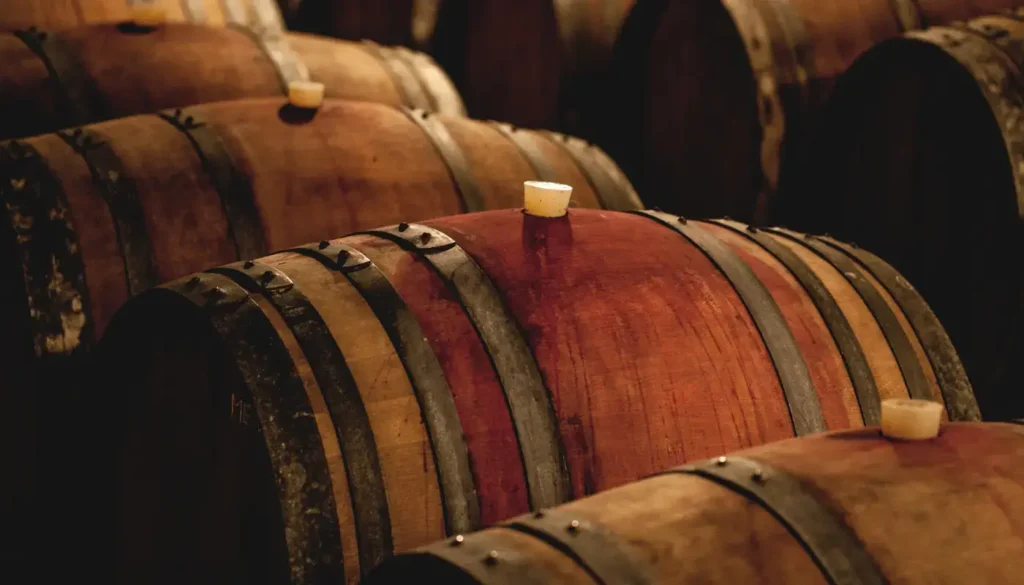
Many wines are aged in oak barrels, which add flavours like vanilla, toast and spice, and soften the wine through slow contact with air. New barrels give more flavour than older ones.
Pressing and free-run juice
Pressing squeezes the juice out of the grapes. The juice that flows out on its own, before pressing, is called free-run juice and is usually the finest. Press juice, squeezed out afterwards, has more tannin and colour.
Pump-over
A pump-over, or remontage, is a way of extracting colour and tannin during red wine fermentation. The juice is pumped from the bottom of the tank and sprayed over the cap of skins floating on top.
Punch-down
A punch-down, or pigeage, means pushing the cap of skins back down into the fermenting juice, by hand, foot or machine. It’s a gentler way to extract colour and flavour, popular for delicate reds like Pinot Noir.
Racking
Racking means moving the wine from one tank or barrel to another, leaving the lees and sediment behind. It helps clarify the wine naturally, without fining or filtration.
Riddling
Riddling, or remuage, is a step in the traditional method. The bottles are slowly turned and tilted upside down, so the dead yeast slides into the neck, ready for disgorgement. It was once done by hand, but is now mostly done by machine.
Skin contact and orange wine
Orange wine is a white wine made like a red, with the juice left in contact with the grape skins. This gives it an amber colour, some tannin and flavours of dried fruit, tea and nuts. It’s an ancient technique, especially in Georgia, and is popular with many natural winemakers.
Traditional method
The traditional method is the way Champagne is made: a second fermentation takes place in each bottle, creating the bubbles. It’s also used for Cava, Crémant and English sparkling wine. See our guide to how sparkling wine is made.
Yeast
Yeast is the tiny fungus that turns sugar into alcohol during fermentation. Wild, or indigenous, yeasts live naturally on the grapes and in the winery, and can add complexity but are less predictable. Cultured yeasts are selected strains added by the winemaker for a more reliable fermentation.
What do vineyard terms mean?
Canopy management
Canopy management means controlling the leaves and shoots of the vine, by trimming, removing leaves or training the shoots. It helps the grapes get the right amount of sun and air, so they ripen well and stay healthy.
Frost
Spring frost is one of the biggest risks in cool regions. A cold night after the buds have opened can destroy a large part of the crop, so growers use heaters, candles, wind machines or water sprinklers to protect their vines.
Hail
Hail can shred leaves and split grapes in just a few minutes, and a bad storm can wipe out a whole vintage in a vineyard.
Harvest and hand-harvesting
The harvest is when the grapes are picked, usually between August and October in the northern hemisphere. Hand-harvesting is gentler and lets pickers select the best bunches.
Mildew
Mildew is a family of fungal diseases that attack the leaves and grapes, especially in warm, damp weather. The two main types, downy and powdery mildew, are usually controlled with sprays, including copper and sulphur in organic vineyards.
Noble rot
Noble rot, or Botrytis cinerea, is a fungus that shrivels ripe grapes and concentrates their sugar and flavours. It’s behind some of the world’s greatest sweet wines, like Sauternes and Tokaji. Discover them in our guide to dessert wine.
Old vines
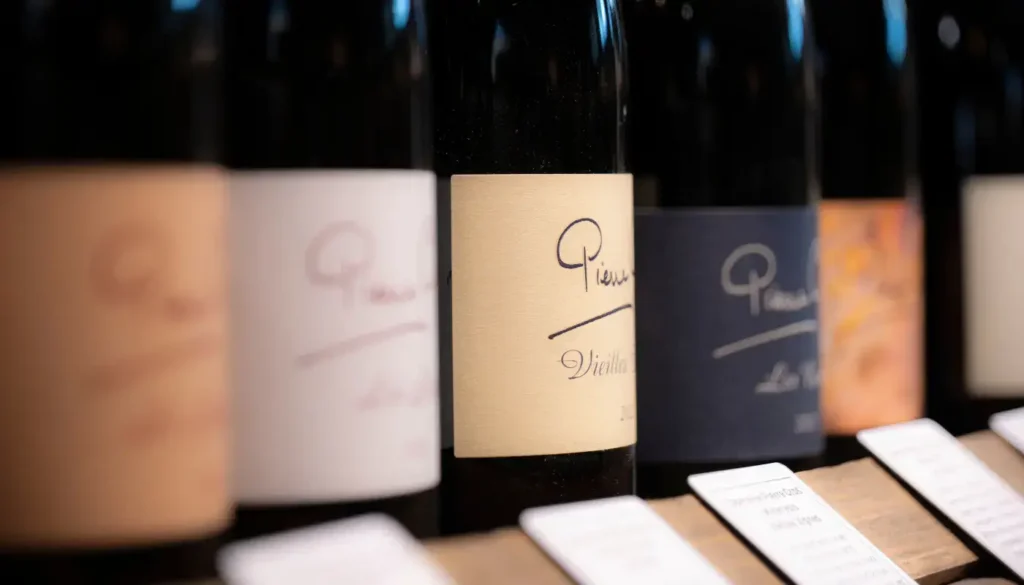
Old vines produce fewer grapes, but often with more concentrated flavours. You’ll see “old vines” or “vieilles vignes” on some labels, but there’s no legal definition of how old the vines must be.
Old World and New World
Old World refers to the traditional wine countries of Europe, like France, Italy and Spain, while New World refers to countries like the United States, Australia, Argentina and New Zealand. Old World wines are often described as more savoury and restrained, and New World wines as riper and fruitier, but there are many exceptions.
Phylloxera
Phylloxera is a tiny insect that feeds on vine roots. Brought over from North America, it destroyed most of Europe’s vineyards in the late 19th century. Today, most vines are protected by grafting them onto resistant rootstocks.
Pruning
Pruning means cutting back the vine in winter. It controls how many buds, and so how many grapes, the vine will grow the following year, which affects both quantity and quality.
Rootstock
A rootstock is the root part of a vine onto which another variety is grafted. Most European vines are grafted onto American rootstocks, which resist phylloxera.
Terroir
Terroir is a French word for everything about a place that shapes its wine: the soil, the climate, the slope of the vineyard and even local traditions. It’s why the same grape can taste so different from one region to another.
Varietal
A varietal wine is named after the grape it’s made from, like a Merlot or a Sauvignon Blanc, rather than after the region.
Vintage
The vintage is the year the grapes were harvested. Weather changes from year to year, so the same wine can taste different from one vintage to the next.
Yield
Yield is the amount of grapes a vineyard produces. Lower yields usually give more concentrated wines, which is why many top appellations set a maximum yield.
What do the words on a wine label mean?
Appellation (AOC, DOC, DOCG)
An appellation is an official wine region with its own rules about which grapes can be used and how the wine must be made. In France, it’s called AOC or AOP. In Italy, the levels are DOC and the higher DOCG.
Blanc de Blancs and Blanc de Noirs
Blanc de Blancs means a white wine made only from white grapes; in Champagne, that means Chardonnay. Blanc de Noirs is a white wine made from black grapes, like Pinot Noir and Pinot Meunier, whose juice is clear.
Brut, Extra Brut and Demi-Sec
These terms describe the sweetness of sparkling wine. From driest to sweetest: Brut Nature, Extra Brut, Brut, Extra Dry, Dry (or Sec), Demi-Sec and Doux. Confusingly, Extra Dry is sweeter than Brut. Learn more in our guide to Champagne vs Prosecco.
Château, Domaine and Négociant
A château (in Bordeaux) or a domaine (in Burgundy and elsewhere) is an estate that grows its own grapes and makes its own wine. A négociant buys grapes or wine from growers and sells it under its own name.
Clos
A clos is a vineyard surrounded by a wall, or one that once was. It’s a common term in Burgundy and other French regions, like the famous Clos de Vougeot.
Cru, Grand Cru and Premier Cru
A cru is a vineyard or village with a reputation for quality. The meaning changes by region: in Burgundy, Grand Cru vineyards are the very top, above Premier Cru, while in Bordeaux, the term usually refers to a classification of châteaux.
Cuvée
Cuvée can mean a particular blend or batch of wine, often a producer’s special selection. In Champagne, it also refers to the first and finest juice from pressing the grapes.
Estate bottled
Estate bottled means the wine was made and bottled by the estate that grew the grapes. In French, you’ll see “mis en bouteille au château” or “au domaine” on the label.
IGP and Vin de Pays
IGP, or Vin de Pays, is a French category below AOC. Its rules are more flexible, so winemakers can use a wider range of grapes, and the grape variety is often named on the label.
Kabinett and Spätlese
These German terms describe how ripe the grapes were at harvest. Kabinett wines are the lightest, and Spätlese (“late harvest”) wines are riper and often sweeter. Find out more in our guide to Riesling.
Late harvest
Late harvest wines are made from grapes left on the vine longer than usual, so they become riper and sweeter. In Alsace, they’re called Vendanges Tardives, and in Germany, Spätlese.
Lieu-dit
A lieu-dit is a small, named plot of vineyard with its own traditional name. It’s more specific than a village wine, but isn’t officially classified as a Premier or Grand Cru.
Monopole
A monopole is a vineyard owned entirely by a single producer, so only one wine is made from it. You’ll see the term mostly in Burgundy.
NV (non-vintage)
NV means the wine is a blend of several years, rather than one vintage. Most Champagne is non-vintage, which helps each house keep the same style every year.
Reserva and Gran Reserva
In Spain, these terms tell you how long a wine has been aged. In Rioja, a red Reserva must be aged for at least three years, including one in oak, and a Gran Reserva for at least five years, including two in oak.
Second wine
A second wine is made by a Bordeaux château from grapes or barrels that didn’t make it into its main wine, often from younger vines. It offers a taste of the château’s style at a lower price.
Single vineyard
A single-vineyard wine is made only from grapes grown in one named vineyard, rather than blended from several sites. It shows the character of that particular place, and the vineyard name usually appears on the label.
What words are used when serving wine?
Breathing
Letting a wine breathe means exposing it to air, by decanting or swirling it in the glass, so its aromas can open up.
Decanting
Decanting means pouring wine from the bottle into a decanter. It helps young wines open up and separates older wines from their sediment. Find out when to do it in our guide on how to serve wine.
Sediment
Sediment is the harmless deposit that forms in some older red wines and Vintage Port as they age. Decanting the wine leaves it behind in the bottle.
What words describe wine faults?
Most bottles are perfectly fine, but it helps to know the signs of a faulty wine. Find out more in our guide on how to tell if a wine is bad.
Brett
Brett is short for Brettanomyces, a wild yeast that can grow in wine, especially in old barrels. It gives smells of farmyard, leather or sticking plaster. A touch can add complexity to some reds, but too much spoils the fruit.
Cooked
A cooked wine has been damaged by heat, for example in a hot car or shop window. It tastes flat and stewed, and the cork may be pushed up slightly.
Corked
A corked wine has been spoiled by a chemical called TCA, often from a contaminated cork. It smells of wet cardboard or a damp cellar.
Mousy
Mousy is a bacterial fault that leaves an unpleasant aftertaste, a bit like a mouse cage or stale crackers. Strangely, you often only notice it after you swallow. It’s most common in wines made with little or no sulphites, like some natural wines.
Oxidised
An oxidised wine has been exposed to too much air. It loses its fresh fruit, turns brownish and tastes flat, a bit like a bruised apple.
Reduction
A reduced wine has been kept away from oxygen for too long during winemaking, which creates sulphur smells like struck match, rotten eggs or cabbage. Mild reduction often disappears after swirling or decanting.
Volatile acidity
Volatile acidity, or VA, comes from bacteria turning alcohol into acetic acid, the acid in vinegar. A little can lift the aromas, but too much makes a wine smell of vinegar or nail varnish.
FAQ
What does “dry” mean in wine?
A dry wine isn’t sweet, because almost all the grape sugar has been turned into alcohol. It has nothing to do with the drying feeling of tannins.
What does “full-bodied” mean?
A full-bodied wine feels rich and weighty in your mouth, usually because it has more alcohol. Cabernet Sauvignon, Malbec and oaked Chardonnay are classic examples.
What’s the easiest way to learn wine terms?
Taste with a friend and describe what you notice, even in simple words. Over time, the terms in this glossary will start to make sense in your glass.