How is white wine made? While white wines are often lighter and fresher in style, the process behind them is just as precise as for red wine. The key difference lies in when the grape skins are removed, which plays a major role in shaping colour, texture, and flavour.
This guide explains how white wine is made, step by step, from grape to bottle.
What Makes White Wine Different from Red Wine?
The main difference between white and red wine lies in skin contact during winemaking.
When making white wine, grapes are usually pressed shortly after harvest, and the juice is fermented without extended contact with the skins. This limits the extraction of colour and tannins, keeping white wines pale in colour and lighter in structure.
Because colour comes from the skins rather than the flesh itself, white wine can be made from both white and red grapes, as long as the skins are removed early.
Red wine is made differently. The juice ferments together with the skins in a process known as maceration, which extracts colour, tannins, and flavour compounds.
In short, it’s not the colour of the grape that determines whether a wine is red or white – it’s how the grapes are processed.
Harvesting the Grapes
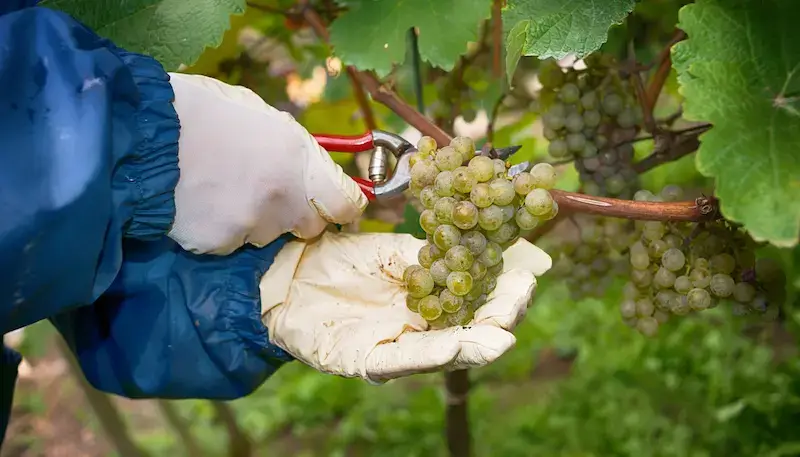
White wine grapes are often harvested earlier than red wine grapes to preserve freshness and acidity. This timing is especially important for white wines, as acidity plays a key role in their balance, structure, and ageing potential.
If grapes are picked too late, white wines can lose their crispness and feel heavy or flat. For this reason, winemakers monitor ripeness closely and choose the harvest date based on the style they want to achieve.
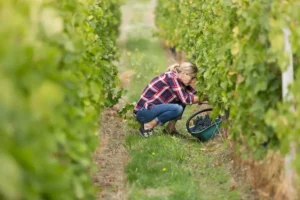
Harvesting can be done by hand or by machine. In warmer regions, grapes are sometimes picked early in the morning or at night to keep them cool and reduce the risk of oxidation. Once harvested, the grapes are transported quickly to the winery so they can be pressed while still fresh.
Pressing the Grapes
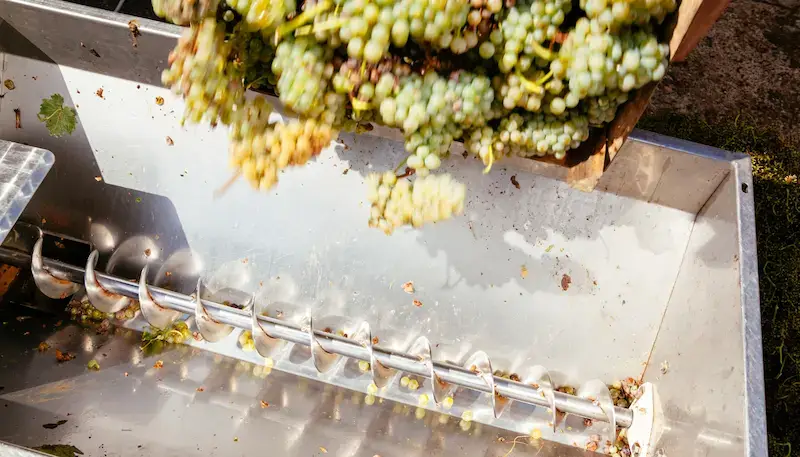
For most white wines, pressing takes place before fermentation.
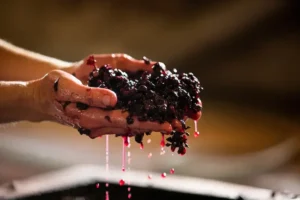
The harvested grapes are gently pressed to extract the juice while limiting contact with the skins. This is an important step, as extended skin contact can add bitterness, colour, or coarse phenolics that are usually undesirable in white wines.
Once pressed, the juice is separated from the skins and solids and transferred to a tank or barrel. The goal at this stage is to obtain clean, fresh juice that will ferment smoothly and preserve the wine’s natural aromas and acidity.
Some white wines may undergo a short period of skin contact before pressing, often lasting a few hours. This remains a white wine and is used to bring out more aromas or texture.
When white grapes are fermented with extended skin contact, lasting weeks or even months, the result is orange wine – a distinct style with deeper colour, more texture, and noticeable tannic structure.
Juice Clarification
After pressing, the grape juice often contains small solid particles from the skins and pulp. Before fermentation begins, this juice is usually clarified to ensure a clean, controlled fermentation and to preserve delicate aromas.
Clarification can happen naturally by allowing the juice to rest so solids settle at the bottom, or it can be gently assisted to remove excess sediment more quickly. The aim isn’t to strip flavour, but to start fermentation with clear juice that will ferment evenly and predictably.
This step helps reduce the risk of off-flavours later on and contributes to the fresh, precise character that many white wines are known for. Once the juice is clarified, it’s ready to move into fermentation.
Fermentation
Fermentation is the stage where yeast converts the grape sugars into alcohol, turning juice into wine.
White wines are typically fermented at cooler temperatures than red wines. Cooler fermentation helps preserve fresh fruit flavours, floral aromas, and natural acidity, which are central to many white wine styles.
White wine fermentation usually takes place in stainless steel tanks to emphasise purity and freshness, but some white wines are fermented in oak barrels for added texture and complexity. The choice of vessel plays an important role in shaping the wine’s final character.
Fermentation can last from a few days to several weeks, depending on temperature and style. Once fermentation is complete, the wine moves on to the next stage, where texture and balance can be further developed.
Lees Ageing (Optional)
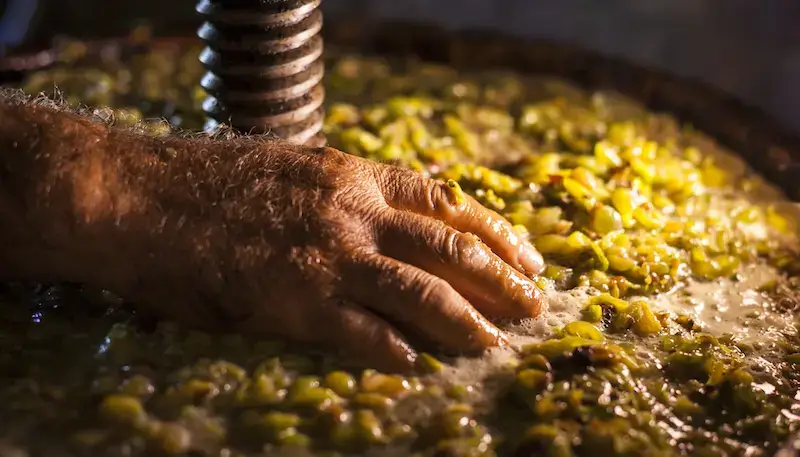
After fermentation, some white wines are left to rest on their lees, which are the spent yeast cells remaining after fermentation.
Lees ageing can add texture, richness, and complexity, giving the wine a fuller mouthfeel and more weight on the palate. In some cases, the lees are gently stirred to enhance this effect, while in others they are left undisturbed to contribute more subtly.
This technique is commonly used for certain white wine styles, but it’s far from universal. Many whites are bottled without extended lees contact to preserve a fresher, lighter profile. Whether lees ageing is used depends entirely on the style the winemaker wants to achieve.
Malolactic Fermentation (Optional)
Unlike red wine, malolactic fermentation is optional for white wines and is used selectively depending on the style being made.
This process converts sharper malic acid into softer lactic acid, reducing acidity and creating a rounder, smoother mouthfeel. In some white wines, malolactic fermentation adds richness and depth, while in others it’s avoided to preserve freshness and crispness.
Whether malolactic fermentation is encouraged or blocked depends on the grape variety, region, and the winemaker’s intended style. It’s one of the key decisions that helps explain why white wines can range from bright and zesty to creamy and full-bodied.
Ageing: Tank, Barrel or Bottle
After fermentation, white wine is aged to develop flavour, texture, and balance. The ageing method chosen depends entirely on the style the winemaker wants to create.
Many white wines are aged in stainless steel tanks, which preserve freshness, fruit purity, and acidity. This approach is commonly used for crisp, aromatic styles designed to be enjoyed young.
Other white wines are aged in oak barrels, where slow oxygen exposure can add texture and complexity. Barrel ageing may contribute subtle flavours such as spice, toast, or nuttiness, while also softening the wine’s structure. Some wines are fermented and aged in barrel, while others are transferred to barrel after fermentation.
Once bottled, certain white wines are ready to drink immediately, while others benefit from additional bottle ageing, allowing flavours to integrate and evolve over time. Ageing choices play a major role in defining a white wine’s final character.
While stainless steel and oak are the most common choices, some producers also use alternative vessels such as concrete eggs or amphorae. These materials can influence texture and oxygen exposure in subtle ways, but they remain a stylistic choice rather than the norm.
Clarification & Stabilisation
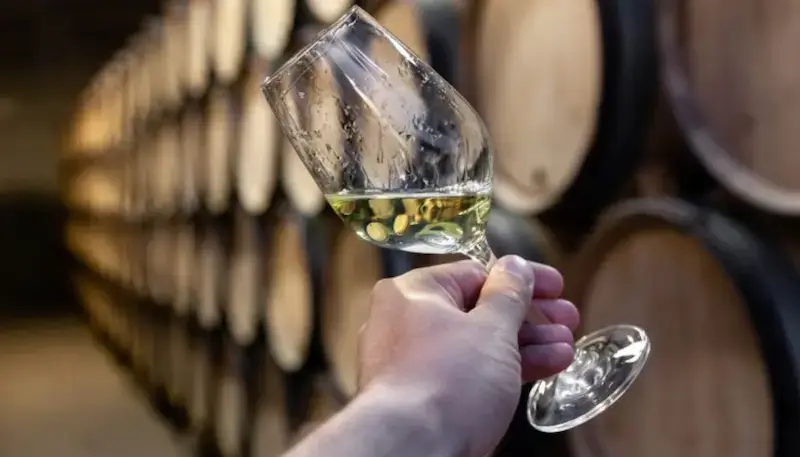
Before bottling, white wine is clarified and stabilised to ensure it remains clear, balanced, and stable over time.
Any remaining particles from fermentation or ageing are removed, either by allowing the wine to settle naturally or through gentle clarification methods. The goal is not to strip flavour, but to prevent haze, sediment, or unwanted changes once the wine is bottled.
Stabilisation also helps ensure the wine won’t develop visual or textural issues later on, such as cloudiness when chilled. While most white wines go through this step, some producers choose to bottle wines unfined or unfiltered as a stylistic decision, accepting a more natural appearance.
At this stage, winemaking choices can also influence whether a wine is suitable for vegetarians or vegans, depending on the methods used.
Bottling the Wine
Once the winemaker is satisfied with the wine’s balance, clarity, and stability, it is ready to be bottled. At this stage, the wine is sealed using a cork, screwcap, or alternative closure, depending on the style of wine and the producer’s preference.
Many white wines are bottled with the intention of being enjoyed young, highlighting freshness and aromatic purity. Others are designed to age further in bottle, where flavours can develop and integrate over time.
After bottling, the wine is ready to be released – either immediately or after a period of additional bottle ageing.
How White Wine Style Is Shaped
Every step in the process plays a role in shaping the final wine. Harvest timing, pressing decisions, fermentation temperature, ageing method, and optional techniques such as lees ageing or malolactic fermentation all influence a white wine’s flavour, texture, and ageing potential.
Understanding how white wine is made helps explain why styles range from light and zesty to rich and complex – and why winemaking choices matter just as much as the grape itself.