Not sure whether your wine has gone bad – or if it’s actually faulty? It happens more often than you’d think. And while personal taste plays a role in whether you like a wine, a faulty wine is one that’s genuinely gone wrong in how it smells, tastes, or looks.
This guide walks you through the most common wine faults, what causes them, and how to recognise the tell-tale signs so you can confidently spot a bad bottle. We will also cover common quirks that look strange but aren’t actually faults.
What Does It Mean for a Wine to Be Faulty?
A wine is considered faulty when something has damaged it during production, bottling, storage, or transport. These faults alter the aromas and flavours enough that the wine no longer tastes the way the producer intended.
Faults are not about preference (e.g. “I don’t like oaked Chardonnay”). They’re actual problems that make the wine smell or taste wrong.
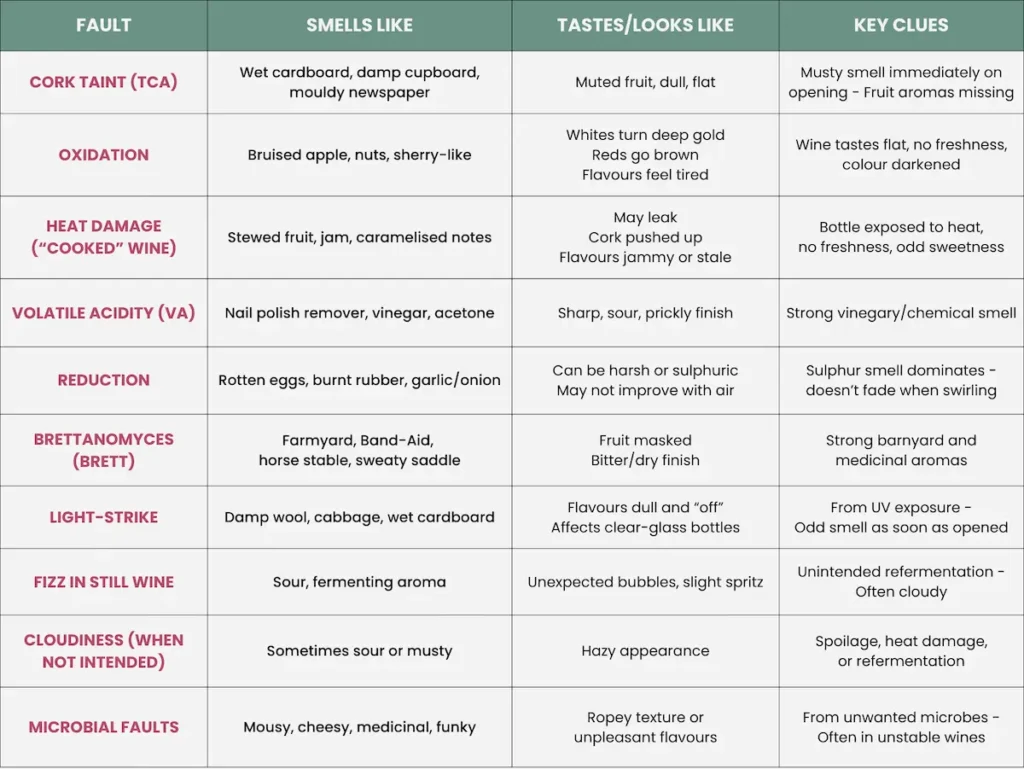
Common Wine Faults (and How to Recognise Them)
Cork Taint (TCA)
Smells like: wet cardboard, damp basement, mouldy newspaper
Tastes like: muted, flat, dull, no fruit
One of the most well-known faults, cork taint is caused by TCA, a compound that can develop in natural cork. It won’t harm you, but it strips wines of freshness and fruit, leaving a musty, dull impression.
How to spot it:
- Musty smell appears immediately after pouring
- Fruit aromas seem muted or missing
- Wine tastes lifeless or empty

Oxidised Wine
Smells/tastes like: bruised apple, nuts, sherry-like notes, flattened or tired flavour
Looks like: white wines turn deep gold/amber; red wines go brick or brown at the rim
Oxidation happens when the wine has been exposed to too much oxygen – either due to a faulty closure, long-term air exposure, or an opened bottle sitting too long.
How to spot it:
- Whites look darker than usual
- Reds taste dried-out or sour
- Fresh fruit flavours have disappeared
Note: Some wines are intentionally oxidised (like Sherry or certain Jura whites), and that’s part of their style.
Heat Damage (“Cooked” Wine)
Smells like: stewed fruit, jam, prunes, cooked or caramelised notes, flat, sometimes a slightly sour edge
Looks like: cork pushed up, leakage around the capsule
When wine gets too warm – in transport, storage, a hot car, or next to a radiator, it becomes “cooked”. The flavours lose freshness and develop heavy, jammy notes.
Heat damage can’t be reversed, so the wine will taste “off” from the first sip.
How to spot it:
- Wine tastes cooked, jammy, or oddly sweet
- Cork is protruding or leaking
- No sense of freshness
Volatile Acidity (VA)
Smells like: nail polish, vinegar, acetone
All wines contain a little VA, but when levels are too high, the wine smells sharp, vinegary and chemical.
A small amount can be normal, especially in certain natural or old-world styles. But if VA dominates, it’s a fault.
How to spot it:
- Vinegary tang on the nose
- Prickly, sour finish
- Strong solvent-like aroma

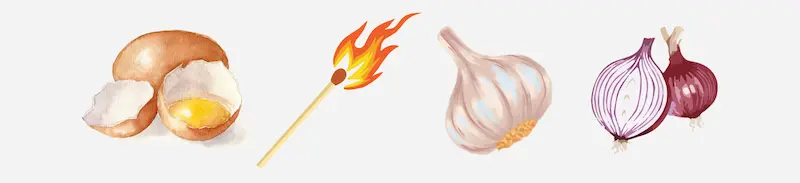
Reduction (Severe Sulphur Compounds)
Smells like: rotten eggs, burnt rubber, struck match, garlic/onion
The opposite of oxidation – reduction occurs when wine doesn’t get enough oxygen during winemaking or bottling. A subtle struck-match character can be intentional (especially in certain Chardonnays), but strong sulphurous smells are a fault.
How to spot it:
- Strong eggy or rubbery smell
- Doesn’t improve after swirling
- Fruit is masked by sulphur notes
Good news: mild reduction can sometimes blow off with swirling. Strong reduction rarely improves.
Brettanomyces (“Brett”)
Smells like: farmyard, barnyard, horse stable, band-aid, medicinal, sweaty saddle
Brett is a wild yeast that can give wine funky, savoury aromas. A touch can add earthy complexity for some drinkers – especially in Rhône or natural wines. But too much overwhelms the fruit and leaves the wine smelling dirty.
How to spot it:
- Strong farmyard or band-aid smell
- Fruit almost disappears
- Often leaves a dry, slightly bitter finish

Light-Strike
Smells like: damp wool, wet cardboard, cabbage
Mostly affects: light-coloured wines in clear glass (rosé, sparkling, whites)
Light-strike affects wines stored in bright light – especially wines in clear or pale glass bottles.
How to spot it:
- Strange funky smell right after pouring
- Flavours seem washed out
- Bottle was stored in bright light

Microbial Spoilage (Bacteria or Wild Yeasts Gone Wrong)
Smells like: mousy, cheesy, sweaty, sour milk, barnyard in a bad way
Tastes like: metallic, sour, gritty, unpleasantly funky
Looks like: sometimes cloudy, sometimes with film on the surface
Microbial spoilage is caused by unwanted bacteria or yeasts growing in the wine – often due to poor hygiene, unstable bottling, or insufficient sulphur dioxide (SO₂) protection. Unlike intentional fermentation characteristics (like controlled Brett or minimal SO₂ styles), microbial spoilage smells and tastes dirty rather than complex.
How to recognise it:
- Strong “mousy” aroma (often more noticeable in the aftertaste)
- Cheesy, sweaty, or cheesy-corn-chip notes
- Cloudiness paired with off-smells
- Metallic or sour flavours that feel wrong
- Wine tastes unstable or “fermented in the wrong direction”
This is never intentional and always a fault. Once it’s there, it can’t be fixed – return or discard the bottle.

Fizz in Still Wine
If a wine that should be still has a spritz, it may have re-fermented in the bottle, often due to residual sugar or unstable bottling.
How to recognise it:
- Light spritz or fizz on the tongue
- Slight cloudiness
- Sour, tangy edge
What it indicates:
- Faulty bottling
- Unstable wine
- Residual sugar re-fermenting
Sometimes harmless… but usually a fault.
Cloudiness (When It Should Be Clear)
Not every cloudy wine is faulty – many natural wines are intentionally unfiltered. But if a wine that’s supposed to be clear suddenly looks hazy:
Some natural wines are intentionally unfiltered and hazy – that’s normal. But if a normally clear wine suddenly appears cloudy, it may indicate:
- Heat damage
- Microbial spoilage
- Unintended refermentation
If it smells strange and looks cloudy, it’s likely faulty.
Things That Look Like Faults But Aren’t
These can seem worrying if you’re new to wine – but they’re completely normal.
Tartrate Crystals (“Wine Diamonds”)
Looks like: Tiny clear or white crystals at the bottom of the bottle or stuck to the cork.
Tartrate crystals form when tartaric acid – a natural component of grapes, solidifies in cold temperatures (fridges, cold shipping conditions, winter delivery vans). They’re totally harmless.
Why it’s not a fault:
- They don’t affect flavour or aroma at all.
- They’re simply a sign the wine wasn’t heavily processed or stabilised.
- Common in high-quality wines, especially whites and Rieslings.
How to tell it’s fine:
The wine smells and tastes completely normal – just pour slowly to leave the crystals behind or decant using a filter.
Sediment in Red Wine or Aged Wine
Looks like: Grainy particles or flakes at the bottom of the bottle.
Sediment forms naturally as tannins and pigments clump and settle over time, especially in older reds or unfiltered wines.
Why it’s not a fault:
- It’s a normal part of ageing.
- Doesn’t change the flavour (though it can feel gritty).
How to tell it’s fine:
Decant the wine and leave the sediment in the bottle – the wine will taste perfectly good.
Slight Cloudiness in Natural or Unfiltered Wines
Looks like: A hazy, cloudy appearance – especially in natural whites or rosés.
Not all wines are meant to be crystal clear. Many producers now avoid filtration to retain flavour, texture, and authenticity.
Why it’s not a fault:
- Cloudy wine is normal when it’s unfiltered.
- It often tastes richer or more textural.
- No off smells = no problem.
How to tell it’s fine:
If it smells clean and fruity, it’s not faulty – the haze is just part of the style.
Crystals or Sediment in Sparkling Wine
Looks like: Tiny flakes or “dust” swirling in a sparkling wine.
This happens when a traditional-method sparkling wine (Champagne, Cava) isn’t fully filtered after ageing on its lees.
Why it’s not a fault:
- Completely safe and flavourless.
- Common in artisanal or lower-dosage styles.
How to tell it’s fine:
The wine tastes fresh, bubbly, and clean.
“Floaties” in Rosé or White Wine
Looks like: Small, soft particles suspended in the wine.
Often caused by tiny fruit or yeast particles that weren’t removed during bottling.
Why it’s not a fault:
- They’re harmless and flavour-neutral.
- Common in minimally processed wines.
How to tell it’s fine:
If the wine smells normal and fruity, it’s not spoiled.
A Light Spritz in Young Whites or Natural Wines
Looks like: A light spritz or gentle tickle on the tongue.
Some wines – particularly Vinho Verde, pét-nat, or low-intervention whites, are intentionally bottled with a touch of CO₂.
Why it’s not a fault:
- It’s added for freshness.
- Style-dependent and often intentional.
How to tell it’s fine:
The fizz feels light and refreshing, not aggressive or sharp.
A Touch of VA, Brett, or Reduction in Certain Styles
Smells like (light levels):
- VA: A slight lift, a hint of balsamic, or gentle sharpness
- Brett: Subtle earthiness, faint leather, mild savoury notes
- Reduction: A little struck match or flintiness
Some winemaking traditions (e.g. Rhône reds, Beaujolais, certain natural wines, some Chardonnays) intentionally embrace small amounts of these compounds. At low levels, they can add complexity, depth, and character.
Why it’s not a fault:
- These aromas are stylistic choices, not mistakes.
- In tiny amounts, they balance fruit and add intrigue.
- Many classic wines historically contained (and still contain) a touch of these elements.
How to tell it’s fine:
- The wine still smells inviting and layered, not aggressive.
- Fruit aromas remain present – they aren’t buried.
- The note fades or integrates with air instead of getting worse.
When it is a fault:
If the wine smells overwhelmingly like vinegar, horse stable, nail polish remover, or rotten eggs – and the fruit disappears, the levels are too high and it moves into “fault” territory.

How to Tell If the Wine Has Gone Bad After Opening
Even good wine spoils quickly once open.
Signs your opened wine is no longer drinkable:
- Sharp vinegar smell
- Flat, dull flavours
- Brownish colour
- Fizz appearing in still wine
- Harsh, sour aftertaste
Most wines last 2–5 days once opened if stored in the fridge.
Is Bad Wine Dangerous?
Not usually. Most faults are harmless – they just make the wine unpleasant. Rare exceptions include:
- Re-fermentation causing pressure build-up
- Severe microbial spoilage
But in general, faulty wine = safe but not enjoyable.
Can You Fix a Faulty Wine?
A few things can be improved slightly, but most faults can’t be fixed.
- Reduction: may improve with swirling or decanting
- Mild cork taint: can seem less obvious with vigorous aeration, but never disappears
- Oxidation, heat damage, Brett, VA, light-strike: not fixable
What to Do If Your Wine Is Faulty
In a restaurant
It’s absolutely fine to send it back. Faulty bottles happen all the time – even in great restaurants.
From a shop
Most wine merchants will replace or refund a faulty bottle, especially if it’s corked.
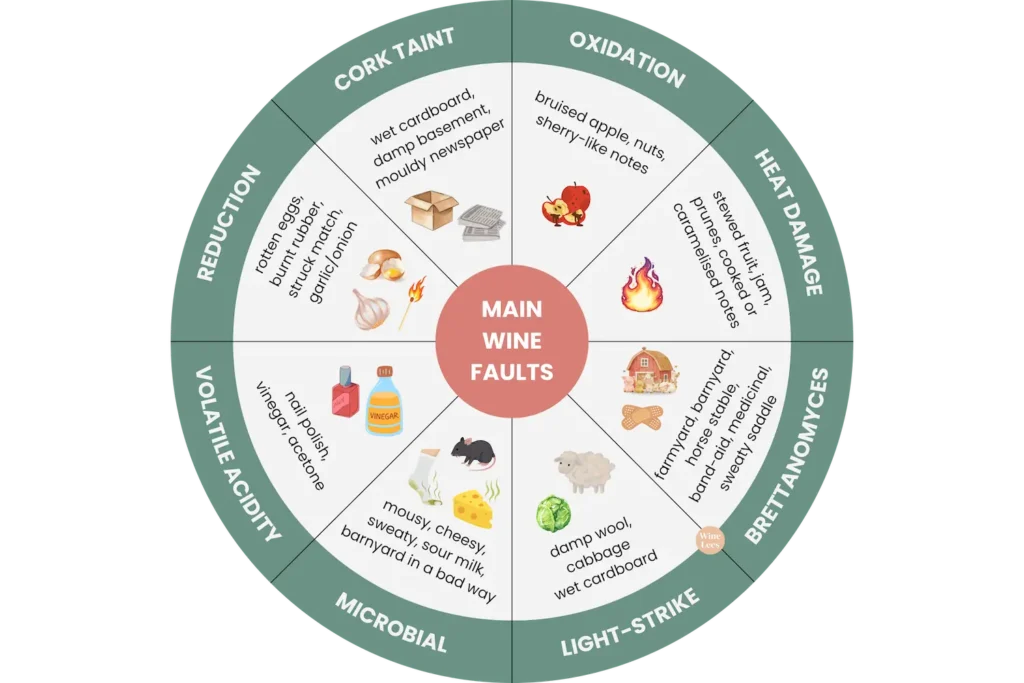
Wine Faults – Summary Table