If you’ve ever found yourself in a wine shop staring at labels like organic, biodynamic, low-intervention, or natural, wondering what any of it actually means – you’re definitely not alone. These terms pop up everywhere, but what do they really stand for? And more importantly… does any of it actually matter once the wine’s in your glass?
This guide breaks everything down in a simple, no-nonsense way so you know exactly what you’re buying (and drinking).
What is Sustainable Wine?
Sustainable wine focuses on making great wine while also taking care of the environment, the people involved, and the long-term health of the vineyard. It’s about using resources responsibly, not overworking the land, and making choices that reduce the winery’s overall impact.
Unlike organic or biodynamic wine, sustainability isn’t tied to one strict farming rulebook. Instead, it’s a broader commitment that can include:
- Reducing chemical use (but not necessarily eliminating it)
- Using water efficiently and protecting local waterways
- Encouraging biodiversity through cover crops, wildlife corridors, and soil health
- Lowering energy consumption, often with solar power or lighter bottles
- Fair working conditions and community investment
- Long-term vineyard health over high short-term yields
There are certification programs – like SIP Certified, LIVE, or B Corp – but not all sustainable wineries pursue them. What they all share, though, is the goal of making wine in a way that’s better for the planet and the people who make it.
What Is Organic Wine?
Organic wine is made from grapes grown without synthetic pesticides, herbicides, fungicides, or chemical fertilisers. Instead, growers focus on natural vineyard management – things like cover crops, compost, and encouraging biodiversity to keep the soil healthy and the vines naturally resilient.
Organic Certification: How It Works
To use the organic label, vineyards must complete a three-year conversion period so the land can clear previous chemical residues. After that, accredited bodies (like the EU Organic Certification or the Soil Association) verify that farming and winemaking practices meet organic standards.
What Counts as Organic in the Winery
Organic rules don’t stop at the vineyard. Winemakers have fewer additives at their disposal and must work with lower permitted sulphur levels. Some processing aids are banned entirely, meaning the approach is generally lower-intervention than conventional wine – though not additive-free.
You may see two different phrases on bottles:
- Organic wine: made from 100% certified organic grapes and vinified according to organic rules.
- Made with organic grapes: at least 70% of the grapes are organic, with more flexibility during winemaking.
What Organic Wine Doesn’t Tell You
The organic label focuses on farming practices, not flavour. An organic wine can be crisp, rich, funky, classic, or anything in between – the certification guarantees the method, not a particular taste.
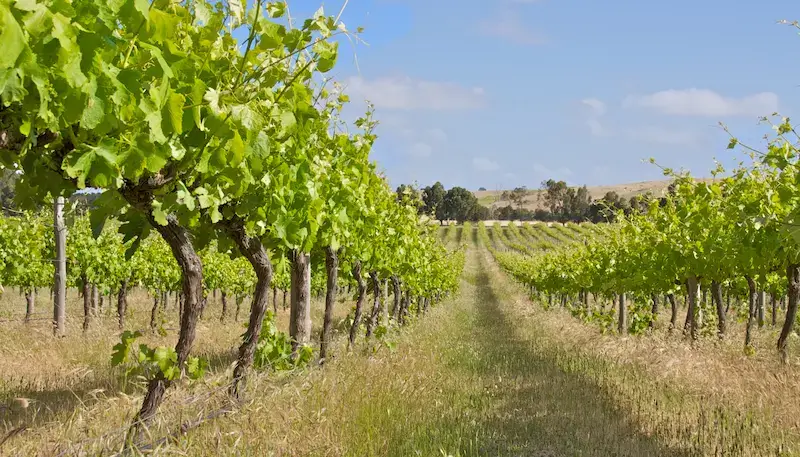
What is Biodynamic Wine?
Biodynamic wine takes organic farming a step further, following the agricultural principles of Austrian philosopher Rudolf Steiner, who believed that a vineyard should function as a balanced, self-sustaining ecosystem. The idea is to treat the vineyard as a living organism, where soil health, plant life, animals, and the rhythms of nature all work together to create thriving vines.
A Holistic Approach to Vineyard Management
Biodynamic farming avoids synthetic chemicals just like organic agriculture, but it adds a spiritual and ecological dimension. Vineyard work is guided by a biodynamic calendar, which follows lunar cycles and cosmic rhythms to determine the ideal days for pruning, harvesting, and even bottling.
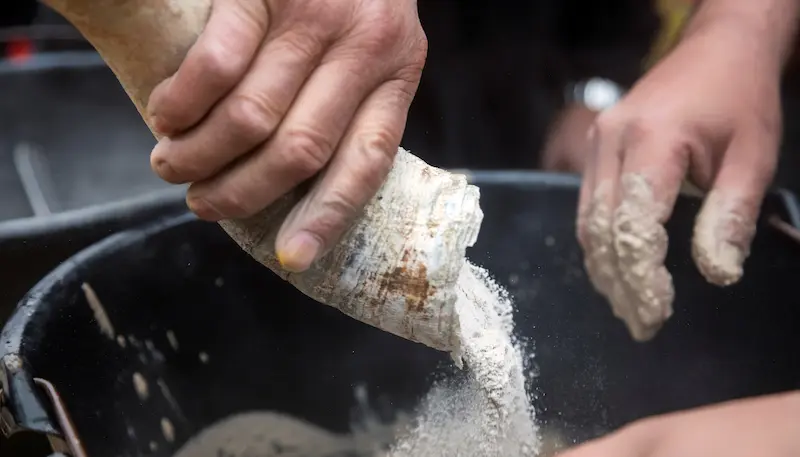
To support soil vitality, growers use special “preparations” made from natural materials such as herbs, minerals, fermented manure, or ground quartz. These preparations are used in extremely small amounts and are often applied as teas or sprays designed to stimulate microbial life in the soil.
Common practices also include:
- Encouraging biodiversity
- Companion planting
- Crop rotation
- Composting and natural pest management
The aim isn’t just to avoid chemicals, but to create vineyards that are healthier, more resilient, and more expressive of their terroir.
Biodynamic Certification
Wineries can choose to be certified biodynamic – the most widely recognised certification is Demeter, though Biodyvin is another respected body. However, not all biodynamic growers pursue certification. Some find the process costly, while others worry that the concept may be misunderstood by consumers, even though the principles behind it are natural and environmentally focused.
What Biodynamic Wine Means in the Glass
Like organic wine, biodynamic wine does not have a single flavour profile. Instead, many producers believe the holistic approach leads to wines that feel vibrant, expressive, or more connected to the character of the vineyard. But this varies widely and depends more on the winemaker than the certification itself.
How Biodynamic Wine Relates to Natural Wine
Although biodynamic farming shares many similarities with natural winemaking – especially in the focus on soil health and low chemical use – not all biodynamic wines are natural wines.
Biodynamic certification governs vineyard practices, but it still allows certain additives and winemaking techniques that natural producers avoid. Some biodynamic wines can be very classic in style, while natural wines follow a different philosophy centred on minimal intervention in the cellar.
What Is Natural Wine?
Natural wine is the most loosely defined of all the categories, largely because there is no global legal definition. At its core, natural wine refers to wine made with as little intervention as possible, both in the vineyard and in the cellar. The philosophy is simple: let the grapes and the place speak for themselves.
Minimal Intervention Winemaking
Most natural winemakers start with organic or biodynamic farming, but what really distinguishes natural wine is what happens once the grapes reach the winery. Fermentation typically relies on wild yeasts naturally present on the grape skins, rather than commercial strains. Additives – from tannins to colour enhancers to flavour compounds – are avoided, and techniques such as fining, filtration, acid adjustments, or concentration are generally not used.
Sulphur dioxide, a common preservative in winemaking, is used sparingly or not at all. Because of this, natural wines can be more sensitive to oxygen and temperature changes, which can affect their stability.
Is Natural Wine Certified?
Unlike organic and biodynamic wine, natural wine doesn’t have a single certifying body. A few associations, such as Vin Méthode Nature in France, offer guidance, but globally the term remains philosophical rather than regulated. This is why natural wines can vary so much from one producer to the next.
How Natural Wine Looks and Tastes
Because natural wines are often unfiltered, they may appear hazy or contain harmless sediment. This cloudiness isn’t a fault; it’s simply the result of the wine being bottled in a more raw, unprocessed state.
In terms of flavour, natural wine covers a broad spectrum. Some are clean and classic, tasting much like traditionally made wines. Others lean into more distinctive characteristics – think wild, funky, cidery, or savoury notes, thanks to spontaneous fermentation and low intervention in the cellar. The style varies hugely depending on the producer.
How Do Sustainable, Organic, Biodynamic, and Natural Wines Compare?
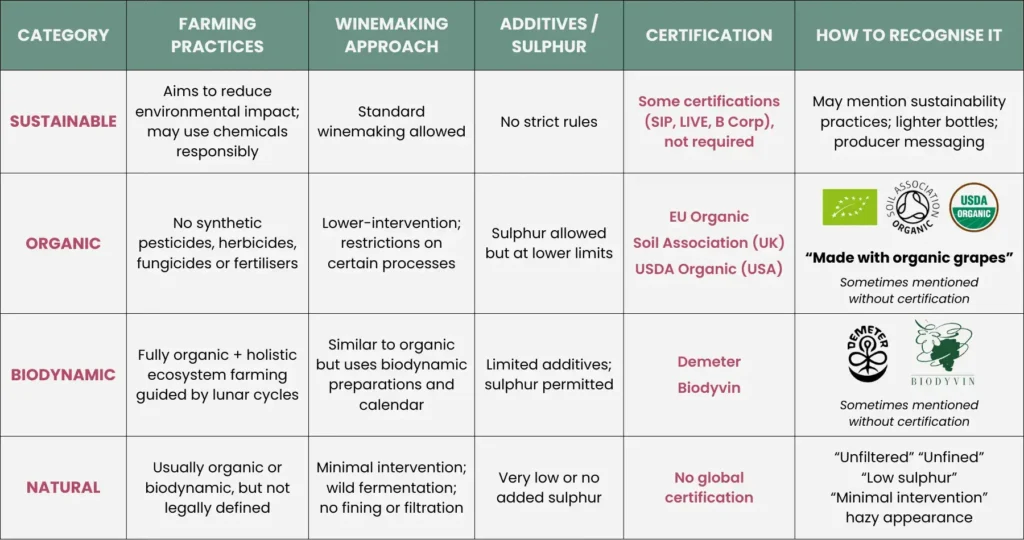
Even though these four categories are often grouped together, they each focus on a different part of the wine’s journey.
Farming
- Sustainable: Flexible, aims to reduce environmental impact (may still use chemicals responsibly).
- Organic: No synthetic pesticides, herbicides, or fertilisers.
- Biodynamic: Fully organic + holistic, ecosystem-based farming guided by lunar cycles.
- Natural: Usually organic or biodynamic, but farming varies because the focus is in the cellar.
Winemaking
- Sustainable: Standard winemaking allowed; not heavily regulated.
- Organic: Fewer additives; lower sulphur levels; some limits on processing aids.
- Biodynamic: Similar to organic but with additional rules and biodynamic preparations.
- Natural: Minimal intervention; wild fermentation; little to no sulphur; no fining or filtration.
Certification
- Sustainable: Some certifications (SIP, LIVE, B Corp), but not required.
- Organic: Strict certification worldwide (EU Organic, Soil Association, USDA).
- Biodynamic: Certified mainly by Demeter or Biodyvin.
- Natural: No global certification; voluntary associations only.
Taste
There is no single taste profile for any category. Sustainable, organic, biodynamic, and natural wines can be light, rich, fruity, funky, classic, or anything in between — it all depends on the grape, region, and winemaker.
Common Myths About Sustainable, Organic, Biodynamic, and Natural Wine
“Organic or natural wine won’t give you a hangover.”
Sadly, alcohol causes hangovers – not farming methods. These styles may have fewer additives, but they won’t spare you if you overdo it.
“Biodynamic wine tastes earthy or mystical because of the moon cycles.”
The lunar calendar guides vineyard timing; it doesn’t add a “flavour.” Any stylistic difference comes from healthy soils and attentive farming, not cosmic influence.
“Natural wine is always funky or cloudy.”
Some natural wines are hazy or wild, but many are clean, fresh, and classic. Cloudiness simply comes from skipping filtration, not poor quality.
“Organic wine has no sulphites.”
Organic wine often has lower sulphur levels – not zero. Sulphites occur naturally during fermentation anyway.
“Sustainable wine is just marketing.”
Not true. Many sustainably certified wineries take meaningful steps toward reducing carbon footprint, water waste, and energy use – even if they’re not organic.
Which Type of Wine Should You Choose?
It depends on what matters most to you:
- Choose sustainable wine if you want environmentally conscious practices without strict farming rules.
- Choose organic wine if avoiding synthetic chemicals is your priority.
- Choose biodynamic wine if you appreciate holistic farming and the idea of vineyards as living ecosystems.
- Choose natural wine if you want minimal intervention in the cellar and are open to more adventurous styles.
There’s no “better” category – only what aligns with your values and taste. The best approach is simply to explore, taste widely, and see what resonates with you.
Are These Wines Always Better for the Environment?
In most cases, sustainable, organic, biodynamic, and natural wines are made with the intention of reducing environmental impact – but the full picture is a little more complex.
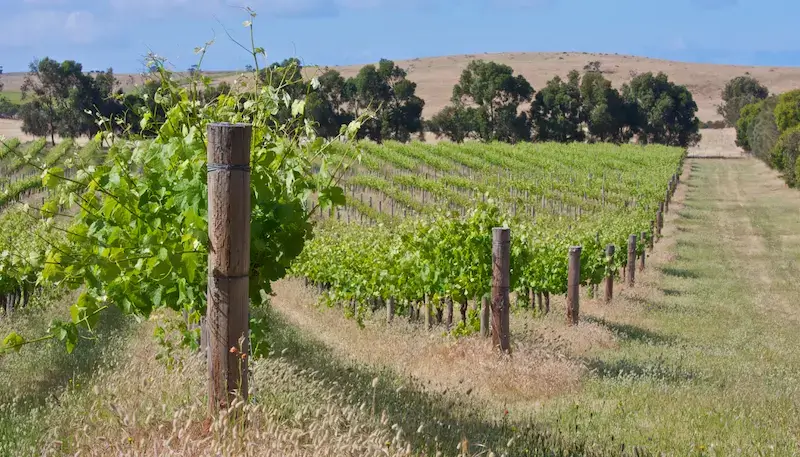
Organic and biodynamic wines generally have a strong ecological focus. They avoid synthetic chemicals, protect soil health, and encourage biodiversity. Biodynamic farming, in particular, is known for creating exceptionally healthy vineyard ecosystems.
Natural wine often follows the same principles, but because it isn’t officially regulated, environmental practices can vary from one producer to another.
However, environmental impact doesn’t end in the vineyard. Factors such as packaging (lighter bottles vs heavy glass),water management in the vineyard and winery, energy use (solar-powered vs conventional facilities), and transport also play major roles.
Transport is often misunderstood. Despite travelling greater distances, wines shipped overseas by cargo ship usually have a lower carbon footprint per bottle than wines transported shorter distances by truck, simply because maritime freight is far more efficient. In other words, a bottle imported from across the world isn’t automatically less sustainable than a locally produced wine – its total footprint depends on how it’s shipped, bottled, and farmed.
Farming is important, but it’s only part of the overall sustainability picture.
How to Know What You’re Buying
Wine labels can be confusing, but there are a few simple ways to tell whether a bottle is organic, biodynamic, natural, or sustainably made – without needing to decode winemaking terminology.
How to Spot Organic Wine
Organic wine is easy to identify because it relies on official certifications.
Look for logos such as:
- EU Organic leaf
- Soil Association (UK)
- USDA Organic (US)
These symbols confirm the grapes were grown according to organic rules.
You may also see “Made with organic grapes,” which means the fruit is organic even if the winemaking has more flexibility.
Note: many wineries follow organic practices without getting certified. Certification can be expensive, time-consuming, or simply not aligned with the producer’s philosophy. In those cases, the wine may be essentially organic in practice but won’t display an official logo.

How to Spot Biodynamic Wine
Biodynamic wine is certified separately.
The two main logos are:
A lot of wineries follow biodynamic principles without certifying, so the absence of a logo doesn’t always mean the wine isn’t biodynamic – but the presence of one guarantees it.

How to Spot Natural Wine
Natural wine isn’t legally defined, so it rarely carries a certification.
Instead, look for clues on the label, such as:
- Unfiltered / Unfined
- Wild or Spontaneous fermentation
- Low sulphur or No added sulphites
- Mentions of minimal intervention
Natural wines also tend to appear in specialist wine bars or shops focused on low-intervention producers.
What Labels Don’t Tell You
These logos and clues only indicate how the wine was made, not how it will taste.
A certified organic or biodynamic wine can be bright, rich, funky, clean, classic, or experimental – the style always depends on the producer.