Dessert wine is any wine with a noticeable sweetness, from golden Sauternes and luscious Tokaji to rich Port and lightly sparkling Moscato. These wines are some of the most complex in the world, yet many of us only open a bottle at Christmas. Here’s how they’re made, the best styles to try and what to serve with each one.
What is dessert wine?
A dessert wine is a wine that keeps some of the grape’s natural sugar, called residual sugar. In most wines, yeast turns almost all the sugar into alcohol during fermentation. Dessert wines, however, keep some of that sugar, either because the grapes were extra ripe or because the winemaker stopped the fermentation early.
In the UK, you’ll also hear them called pudding wines or sweet wines. Despite the name, they’re not only for dessert: a glass of Sauternes is just as good with blue cheese or foie gras as it is with a fruit tart.
How is dessert wine made?
To make a sweet wine, the winemaker needs grapes with more sugar than the yeast can ferment, or a way to stop the fermentation before it’s finished. There are five main methods.
Late harvest
The simplest method is to leave the grapes on the vine well after the normal harvest. As autumn goes on, they become riper and start to shrivel, concentrating their sugar and flavours. Look for “late harvest” on the label, “Vendanges Tardives” in Alsace or “Spätlese” in Germany.
Noble rot
Noble rot, or botrytis, is a fungus that attacks ripe grapes in the right conditions: misty mornings followed by warm, dry afternoons. It pierces the grape skins, letting water evaporate, so the grapes shrivel and their sugar and acidity become very concentrated. As a result, it gives wines with flavours of honey, apricot, marmalade and saffron, like Sauternes and Tokaji.
Ice wine
For ice wine, winemakers leave the grapes on the vine until they freeze in winter, then pick and press them while still frozen. Most of the water stays behind as ice, leaving a small amount of very sweet, concentrated juice. Canada and Germany, where it’s called Eiswein, are the most famous producers. Find out more in our guide to ice wine.
Dried grapes
Another method is to dry the grapes after picking, on straw mats, in racks or in the sun, for several weeks or months. This process, called passito in Italy, concentrates their sugar like raisins. Winemakers use it for Italian Vin Santo from Tuscany, Greek Vinsanto from Santorini, Recioto della Valpolicella and Spain’s Pedro Ximénez (PX).
Fortification
Finally, winemakers can add a neutral grape spirit while the wine is fermenting. The extra alcohol stops the yeast, so the natural sugar stays in the wine. Most Port and many sweet Muscats follow this method.
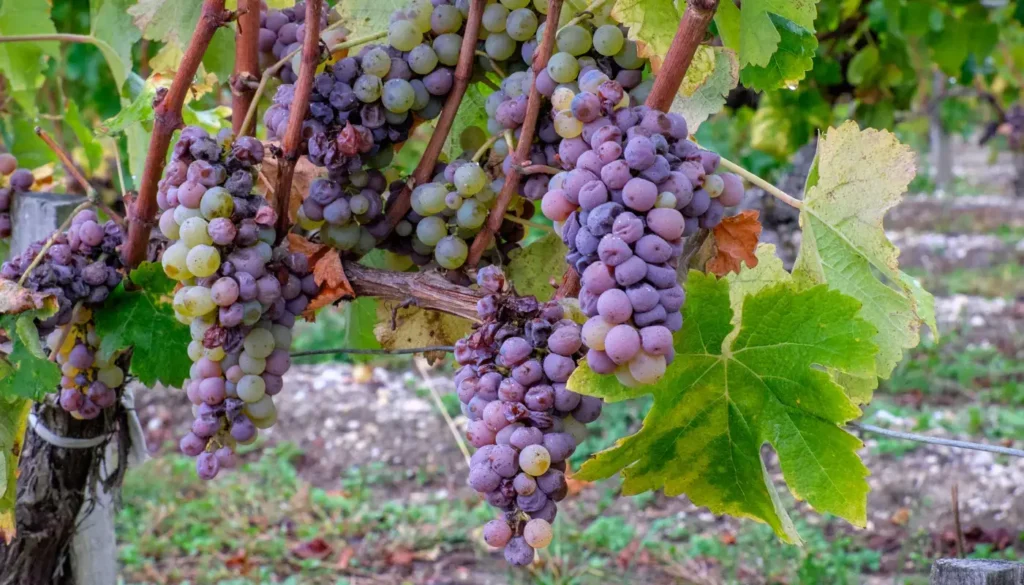
Bunches of white grapes covered in noble rot (Botrytis)
What’s the difference between fortified wine and vin doux naturel?
All fortified wines have grape spirit added, but the timing makes a big difference to the style:
- During fermentation: the spirit stops the fermentation and keeps the wine sweet. This is the case for Port, sweet Madeira and French vins doux naturels, like Banyuls, Maury, Rivesaltes and Muscat de Beaumes-de-Venise.
- After fermentation: the wine ferments until dry before the spirit goes in. Sherry follows this method, which is why most Sherry styles are dry.
- Before fermentation: the spirit goes into unfermented grape juice, so the wine never ferments at all. The French call these vins de liqueur, like Pineau des Charentes, Floc de Gascogne or Macvin du Jura.
Despite their name, vins doux naturels are fortified wines. The “naturel” refers to their sweetness, which comes only from the grapes, with no sugar added. Our guide on how fortified wine is made explains each style in more detail.
What are the best dessert wines?
Here are the classic dessert wines to know:
- Sauternes and Barsac: Bordeaux’s famous noble rot wines, made from Sémillon and Sauvignon Blanc, golden and honeyed. Barsac, a village within Sauternes, can use either name on its label.
- Tokaji Aszú: from Hungary, made with Furmint grapes affected by noble rot, with flavours of apricot and orange peel and vibrant acidity
- German Riesling: most Auslese wines are sweet, while Beerenauslese (BA) and Trockenbeerenauslese (TBA) are rare, intensely sweet noble rot wines. Find out more in our guide to Riesling.
- Ice wine: pure and fresh, with tropical fruit and bright acidity
- Vin Santo: Tuscany’s dried-grape wine, nutty and caramelised, traditionally served with cantucci biscuits
- Vinsanto: from Santorini, made mainly from Assyrtiko grapes, with flavours of dried fruit, caramel and coffee
- Muscat: from the fresh Muscat de Beaumes-de-Venise to the rich, dark Rutherglen Muscat from Australia
- Tawny Port: nutty and smooth, with caramel and dried fruit flavours
- Pedro Ximénez Sherry: dark, syrupy and full of raisins, figs and coffee
Are there sweet red wines?
Yes, although they’re less common than sweet whites. Most of them are fortified or made from dried grapes.
Port
Port is the most famous sweet red wine. A Ruby or Late Bottled Vintage Port is full of blackberry, plum and chocolate flavours, while a Tawny is lighter in colour, with nutty, caramel notes. Discover every style in our guide to Port.
Banyuls and Maury
These vins doux naturels come from Roussillon, in the south of France, near the Spanish border. Made mainly from Grenache, they have flavours of red fruit, cocoa and coffee. They’re one of the few wines that work well with chocolate.
Recioto della Valpolicella
Recioto comes from the Veneto, in northern Italy, and uses the same dried grapes as Amarone. The difference is that the fermentation stops before all the sugar has turned into alcohol, which gives a rich, sweet red with flavours of cherry and plum.
Other sweet reds
Greece makes Mavrodaphne of Patras, a fortified red with dried fruit and spice. Italy’s Lambrusco, a sparkling red, also comes in sweeter styles, labelled amabile or dolce.
What are the best sweet sparkling wines?
Sweet sparkling wines are lighter and fresher than most dessert wines, which makes them perfect after a big meal.
Moscato d’Asti and Asti
Moscato d’Asti comes from Piedmont, in northern Italy. It’s lightly sparkling, low in alcohol and full of grapey, floral aromas, with notes of peach and orange blossom. Asti is its fully sparkling sibling, a little stronger and fizzier.
Brachetto d’Acqui
Also from Piedmont, Brachetto d’Acqui is a sweet, sparkling red that tastes of strawberries and roses. It’s light and low in alcohol, and lovely with red fruit desserts or chocolate.
Demi-Sec and Doux Champagne
Most Champagne is dry, but producers make Demi-Sec and Doux styles sweeter by adding more sugar just before they seal the bottle. A Demi-Sec Champagne works well with fruit tarts, while the rarer Doux is the sweetest style of all.
Understanding sweetness on the label
The label tells you how sweet a sparkling wine is, from driest to sweetest: Brut Nature, Extra Brut, Brut, Extra Dry, Dry (or Sec), Demi-Sec and Doux. Confusingly, “Extra Dry” and “Dry” are sweeter than Brut, so a Prosecco labelled “Dry” is noticeably sweeter than a Brut Prosecco. Our guide on how sparkling wine is made explains where this sweetness comes from.
How do you choose a good-value dessert wine?
The most famous dessert wines, like Sauternes, Tokaji or ice wine, can be expensive, as they’re made from small quantities of very concentrated grapes. The good news is that there are plenty of lovely alternatives for a fraction of the price.
- Loupiac, Cadillac and Sainte-Croix-du-Mont: Sauternes’ neighbours across the Garonne river, made the same way from noble rot grapes
- Monbazillac: from South West France, honeyed and rich, often great value
- German Spätlese Riesling: choose a sweet style rather than a “trocken” (dry) one, lighter and fresher than the great noble rot wines
- Moscatel de Valencia: sweet, fruity and affordable, perfect for everyday desserts
Look out for half bottles (37.5cl) too. They’re a great way to try a new style without spending too much.
What does dessert wine taste like?
Dessert wines all share some sweetness, but their flavours depend on how they’re made:
- Noble rot wines: honey, apricot, marmalade, saffron and ginger
- Ice wines and late harvest wines: fresh tropical fruit, peach, pineapple and citrus
- Dried-grape wines: raisins, figs, dates, nuts and caramel
- Fortified wines: dried fruit, toffee, chocolate and spice, with a warming finish
The best dessert wines are never just sweet. In fact, their acidity balances the sugar and keeps them fresh, so they don’t feel heavy or sticky. That’s why Riesling, Furmint and Chenin Blanc, all grapes with high acidity, make some of the greatest sweet wines.
What food goes with dessert wine?
Desserts
The golden rule is that the wine should be at least as sweet as the dessert, otherwise it will taste thin and sour. Match light fruit desserts with lighter wines, like Moscato d’Asti or a late harvest Riesling, and rich desserts with richer wines. For Christmas ideas, see our guide to wine with Christmas pudding.
A few classic matches:
- Fruit tarts and crème brûlée: Sauternes or Tokaji
- Vanilla ice cream: Pedro Ximénez, poured straight over it
- Chocolate desserts: Banyuls, Maury or Ruby Port
- Almond biscuits: Vin Santo, for dipping
Cheese
Sweet wines and salty cheeses are a wonderful combination. Sauternes with Roquefort and Port with Stilton are two of the great classic pairings, as the sweetness balances the salty, creamy blue cheese. Find more ideas in our guide to wine and cheese pairing.
Savoury dishes
Sauternes is a traditional match for foie gras in France, and works well with rich pâtés. An off-dry Riesling, with just a touch of sweetness, is also great with spicy Asian dishes, as the sugar softens the heat.
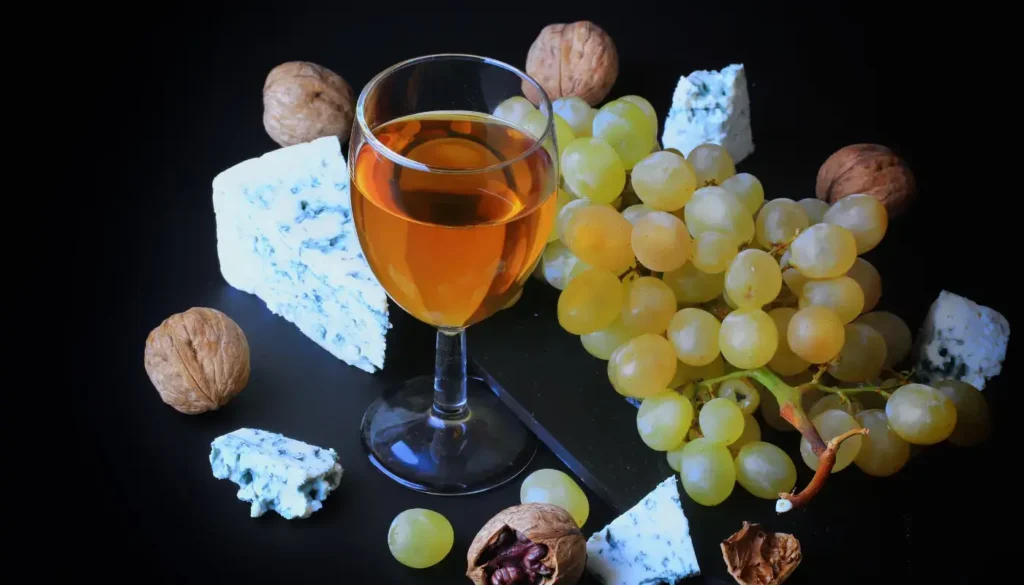
How do you serve dessert wine?
Most sweet wines are best served well chilled, around 6–10°C, which keeps them fresh and lively. Fortified wines are a little different: Tawny Port and sweet Sherry are best lightly chilled, and Ruby or Vintage Port just below room temperature. Our wine serving temperature guide has the ideal temperature for every style.
As dessert wines are rich, a small glass goes a long way. Pour less than you would for a dry wine, and use a small wine glass, so you can still enjoy the aromas. Many dessert wines come in half bottles, perfect for a dinner of four to six people.
How long does dessert wine last once opened?
Thanks to their sugar, dessert wines last a little longer than dry wines once opened. Sweet wines like Sauternes, late harvest Riesling or ice wine generally keep for 3 to 5 days in the fridge, and sometimes a little longer.
Fortified wines, on the other hand, last even longer, from a few days to several weeks depending on the style. See our guide on how long wine lasts once opened for every style.
FAQ
Are dessert wines high in alcohol?
It depends on the style. For example, Moscato d’Asti has only around 5% alcohol, while fortified wines like Port reach around 19–22%, and most other dessert wines sit somewhere in between.
Is dessert wine always served with dessert?
Not at all. Dessert wines are lovely with cheese, foie gras or spicy food, and a glass of Tawny Port or Sauternes makes a great dessert on its own.
How much dessert wine per person?
A small glass per person is usually enough, as these wines are rich and sweet. A half bottle will serve four to six people, and a full bottle around ten small glasses.
Is Moscato a dessert wine?
Moscato d’Asti is a sweet, lightly sparkling wine, often served with dessert. But the Muscat grape also makes dry wines, such as in Alsace, so not every Moscato or Muscat is sweet.