If you’ve ever wondered why Port tastes so different from a regular red, or how Sherry can range from bone dry to lusciously sweet, the answer lies in one defining step: the addition of grape spirit during winemaking. This process – known as fortification – raises the alcohol level, influences sweetness, and plays a central role in shaping the wine’s final style.
This guide explains how fortified wine is made, step by step, from fermentation and fortification through to ageing and bottling.
What Makes Fortified Wine Different?
What sets fortified wine apart from still or sparkling wine is the addition of a neutral grape spirit at some point during production.
This addition does two things depending on when it happens. If the spirit is added during fermentation, it kills the active yeast, halting the conversion of sugar into alcohol. Natural grape sugars remain in the wine, resulting in a sweeter style. If the spirit is added after fermentation has finished, the wine is dry but gains higher alcohol and greater stability for ageing.
That single decision – when to fortify – is the main choice in fortified winemaking, and it explains why the category spans such a wide range of styles. Most fortified wines fall between 15% and 22% ABV, compared to 11-14% for most still wines.
Harvesting the Grapes
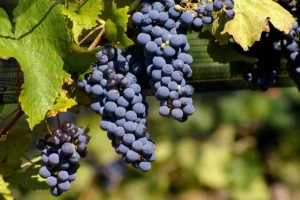
Grapes for fortified wines are often harvested riper than those used for most still wines, particularly when sweeter styles are the goal. Higher ripeness brings higher sugar levels, which contribute to richness, body, and flavour intensity.
Harvest timing is adjusted depending on the intended style. For drier or fresher fortified wines, grapes may be picked earlier to preserve acidity. For richer or sweeter styles, harvest
is delayed to allow sugars and flavours to fully develop.
In some cases, grapes are dried after harvest – either in the sun or in ventilated drying rooms – to concentrate sugars further before fermentation begins. This technique is used in the production of certain styles of Marsala and some traditional Italian fortified wines.
Fermentation
After harvest, the grapes are crushed and fermentation begins, much as it does for any wine. Yeast converts the natural sugars in the grape juice into alcohol, gradually transforming the juice into wine.
In fortified winemaking, however, fermentation is often intentionally interrupted. The winemaker controls how long fermentation is allowed to continue before fortification takes place, which directly affects the wine’s sweetness.
If fermentation is stopped early, a significant amount of residual sugar remains, producing a sweeter wine. If fermentation is allowed to run its course before the spirit is added, very little sugar remains and the wine will be dry.
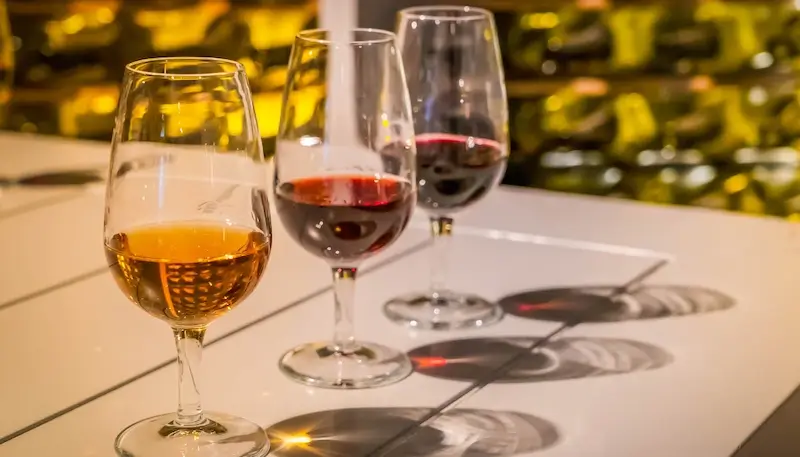
Fortification: Adding the Grape Spirit
Fortification is the defining step in making fortified wine.
A neutral grape spirit – essentially a high-strength, flavourless brandy – is added to the wine, significantly increasing its alcohol content. The timing of this addition is crucial, as it determines the final balance between alcohol, sweetness, and structure.
Fortification DURING fermentation stops the yeast in its tracks. The sudden spike in alcohol is toxic to the yeast, which can no longer function. Whatever sugar remains at that moment stays in the wine permanently. This is how Port achieves its characteristic richness and sweetness – fermentation is typically stopped when roughly half the sugar has been converted, leaving a wine that is both alcoholic and sweet.
Fortification AFTER fermentation leaves the wine dry. The spirit is added once the yeast has done its work and all (or nearly all) of the sugar has been converted. The result is a wine with higher alcohol and greater stability, but without residual sweetness from the fermentation process. This is the approach used for dry styles of Sherry and most Madeira.
By controlling when fortification occurs, winemakers can create a wide range of styles, from sweet to dry.
Ageing and Oxidation
After fortification, many wines undergo extended ageing, which plays a major role in shaping their character.
Some fortified wines are aged in barrels that allow slow, controlled exposure to oxygen. Over time, this gradual oxidation develops complex flavours – roasted nuts, dried fruit, toffee, caramel, and warm spice – while deepening the wine’s colour and softening its texture. Tawny Port and many styles of Sherry are aged this way.
Other styles are deliberately protected from oxygen to preserve freshness, bright fruit, and vibrancy. Ruby Port and Fino Sherry (which is protected by a layer of yeast called flor) are good examples.
Ageing can last anywhere from a few years to several decades. During this time, winemakers may transfer the wine between different vessels, top up barrels to manage evaporation, or blend wines of different ages to build complexity and maintain a consistent style.
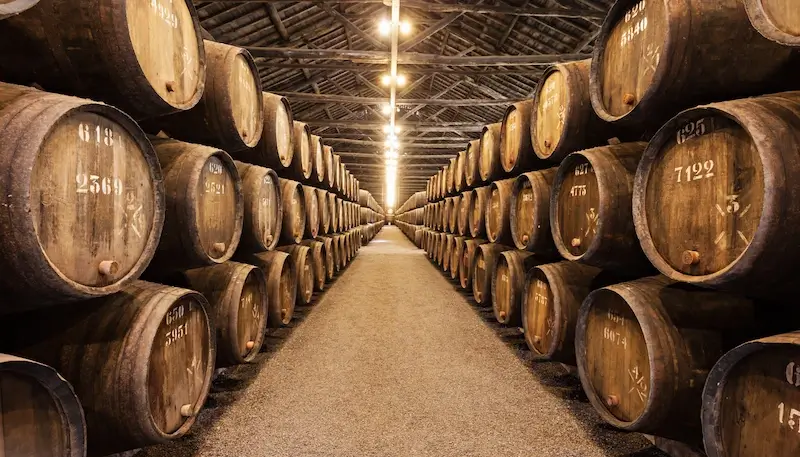
Port cellar
Blending and Style Decisions
Blending is a central part of fortified wine production for most major styles.
Wines from different vineyards, grape varieties, harvests, or stages of ageing may be combined to achieve a particular balance of flavour, sweetness, and structure. This is especially important for producers who aim to maintain a recognisable house style from one release to the next – something particularly associated with non-vintage Sherry and Port.
The Solera system, used in Sherry production and some Madeira, takes this further: wines are gradually blended across multiple years in a cascading series of barrels, so that each bottling contains wine from many different vintages. This produces exceptional consistency and complexity that single-vintage wines cannot replicate.
Clarification, Stabilisation and Bottling
Before bottling, fortified wines are clarified and stabilised to ensure clarity and long-term stability in the bottle.
This may involve allowing particles to settle naturally, filtering the wine, or using fining agents to remove unwanted compounds. Because of their higher alcohol content, fortified wines are inherently more stable than still wines and less prone to spoilage – one reason most of them can be stored and enjoyed over weeks after opening, unlike most table wines.
Once bottled, some fortified wines are ready to drink immediately. Others benefit from further ageing in the bottle and can evolve for many more years, or even decades.
The Major Styles of Fortified Wine
Fortified wines are produced across many regions and in many styles, but a handful of names dominate the category.
- Port is produced in the Douro Valley in Portugal and is typically rich and sweet, with fermentation stopped early to preserve natural grape sugars. Styles range from young, fruity Ruby Port to aged, nutty Tawny and complex Vintage Port.
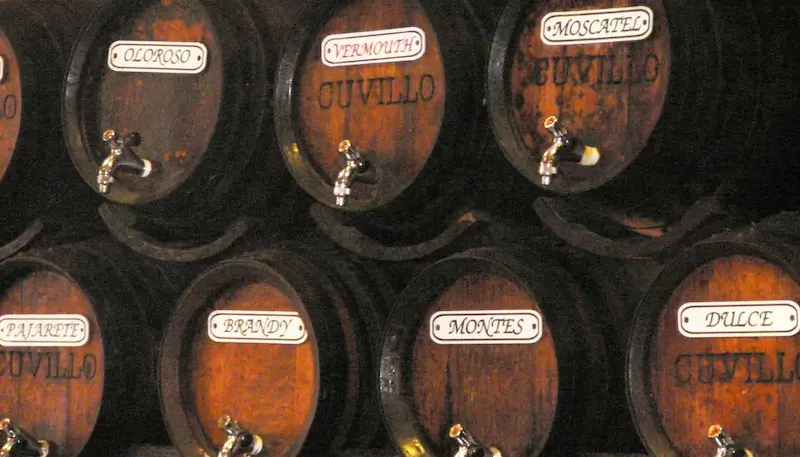
- Sherry comes from the Jerez region of southern Spain and is almost always fortified after fermentation. It spans an extraordinary range – from the searingly dry, saline Fino and Manzanilla to the rich, dark, sweet Pedro Ximénez. Sherry remains one of the most underrated wine categories in the world, and also one of the most food-friendly.
- Madeira is made on the Portuguese island of the same name and is unique for its estufagem process – a controlled heating of the wine that, combined with oxidative ageing, gives it extraordinary longevity. Styles range from dry Sercial to sweet Malmsey.
- Marsala comes from western Sicily and can be produced in both dry and sweet styles. It is perhaps best known as a cooking wine, though high-quality aged Marsala is a serious wine in its own right.
- Muscat and Vin Doux Naturel styles, produced in southern France and elsewhere, are made by stopping fermentation early with grape spirit – similar to Port – resulting in wines that are deeply sweet, aromatic, and perfumed.
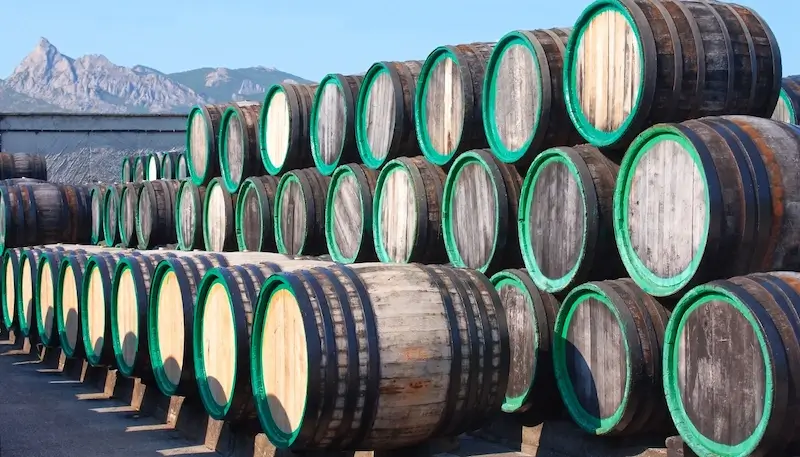
Madeira barrels
What Shapes the Final Style
Several factors influence the final style of a fortified wine.
The ripeness of the grapes, the length of fermentation, the timing and quantity of fortification, the type of vessel used for ageing, the degree of oxygen exposure, and the blending decisions made along the way all leave their mark on the finished wine.
Of these, when the grape spirit is added remains the most decisive factor – it is the fork in the road between sweet and dry. But ageing and blending are what separate a simple fortified wine from a truly complex one. A 20-year Tawny Port or a well-aged Amontillado Sherry reaches a level of depth and nuance that only time can produce.
Understanding these steps makes it easier to appreciate why fortified wines vary so widely – and why, at their best, they are among the most distinctive and long-lived wines in the world.
Frequently Asked Questions About Fortified Wine
What is the difference between fortified and regular wine?
Fortified wine has grape spirit added either during or after fermentation, which raises the alcohol level and affects both sweetness and stability. Regular wine is made through fermentation alone, with no added alcohol.
Why is fortified wine stronger than regular wine?
The addition of grape spirit significantly raises the alcohol content. Most fortified wines sit between 15% and 22% ABV, compared to 11-14% for most still wines.
Is fortified wine always sweet?
No – sweetness depends entirely on when fortification takes place: stop fermentation early and natural sugars remain; let it finish before fortifying and the result is dry. A bone-dry Fino Sherry and a treacly Pedro Ximénez are both fortified wines, produced in the same region. The difference comes down to that one decision made in the cellar.
When is alcohol added to fortified wine?
It depends on the style. For sweet wines like Port, the spirit is added during fermentation to stop it early. For dry wines like Fino Sherry, it is added after fermentation has finished. The timing of this step is the single most important factor shaping the wine’s style.
Does fortified wine age well?
Yes, often exceptionally well. Higher alcohol provides natural stability, and many fortified wines – particularly Vintage Port, aged Madeira, and Amontillado or Oloroso Sherry – can develop in the bottle for decades. Some Madeiras are considered virtually indestructible and have been known to improve over a century or more.
How long does fortified wine last once opened?
Much longer than most still wines. Thanks to their higher alcohol content, most fortified wines will keep for several weeks after opening if stored in a cool place with the bottle resealed. Some styles – particularly dry Sherries like Fino and Manzanilla – are more delicate and are best consumed within a week or two. Richer, sweeter styles can last longer.