Serving wine might seem simple – just open the bottle and pour, right? But temperature, glassware, and even the way you pour can completely change how a wine tastes and smells.
If you’ve ever wondered how to serve wine properly, this straightforward guide will walk you through everything – from the ideal temperature to glassware and pouring tips, so every bottle tastes its best.
This article contains affiliate links. If you buy through them, Wine Lees may earn a small commission at no extra cost to you. Find out more.
Serving Temperature
Temperature is one of the most important parts of wine service as it can make or break a wine.
Too cold and the flavours disappear; too warm and the alcohol dominates. The right temperature helps balance acidity, tannins, and aroma intensity.
As a rule of thumb:
- Sparkling wines: well chilled, around 6-10°C
- Light white wines and rosé: 8-12°C
- Full-bodied whites: 10-13°C
- Light red wines: 12-14°C
- Medium to full-bodied reds: 15-18°C
Quick tip:
- If your red wine feels warm, pop it in the fridge for 15-20 minutes before serving.
- If your white is too cold, let it warm up in the glass for a few minutes.
For a detailed breakdown by wine type (and how to chill or warm them correctly), check out our full Wine Serving Temperature Guide
Choosing the Right Wine Glass
The glass you use can completely change how a wine smells and tastes. Shape, size, and rim width all affect how aromas are released and where the wine hits your palate.
In general:
- Sparkling wines: Flutes or tulip-shaped glasses help maintain the bubbles and focus the bouquet.
- White wines: Go for smaller, narrower glasses to preserve freshness and concentrate aromas.
- Red wines: Use larger, rounder bowls to let oxygen soften the tannins and open up aromas.
Explore our full Wine Glass Guide for a detailed breakdown by glass type and wine style.
How to Open a Wine Bottle
Still Wines
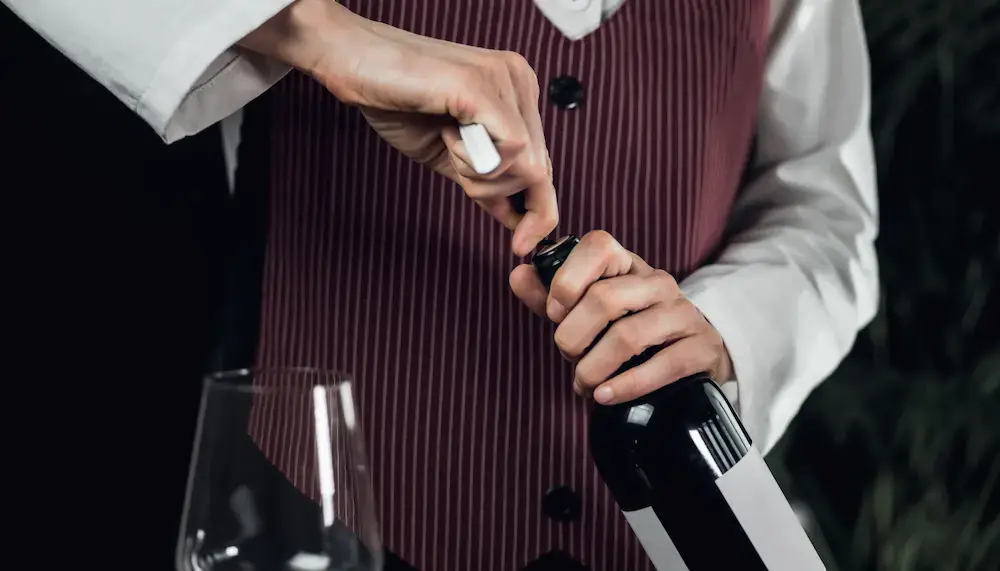
- Use a proper waiter’s corkscrew – the small knife, screw, and lever combination gives you control.
- Cut the foil just below the lip of the bottle.
- Insert the screw slightly off-centre, twist in, and lever gently until the cork pops.
- Wipe the neck to remove any dust or residue before pouring.
Sparkling Wines
- Chill thoroughly before opening (pressure drops as temperature lowers).
- Remove the foil and loosen the wire cage while keeping your thumb on top of the cork.
- Hold the cork firmly, tilt the bottle at a 45° angle, and twist the bottle, not the cork.
- Let the cork ease out with a quiet sigh, not a loud pop.
Decanting & Breathing
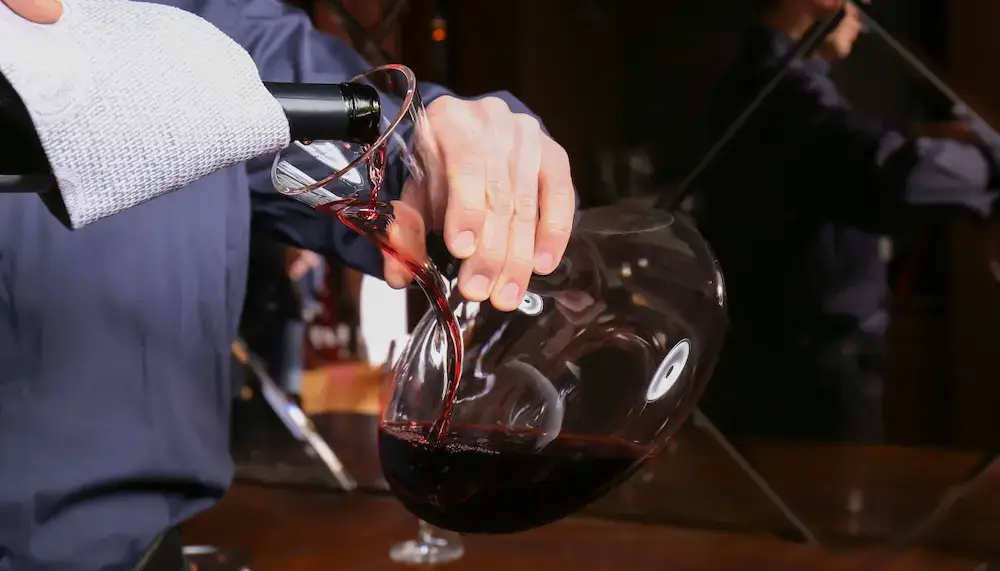
Some wines benefit from a bit of air before serving. Decanting helps soften tannins, open up aromas, and remove sediment from older bottles.
- Young reds like Cabernet Sauvignon or Syrah often benefit from 30-60 minutes of aeration to soften tannins and open up fruit aromas.
- Aged wines should be handled more gently – decant carefully only to remove sediment, and serve soon after to avoid over-aerating delicate flavours.
- Whites rarely need decanting, but full-bodied white like an oaked Chardonnay can benefit from a few minutes in a larger glass.
Tip: Not every wine needs decanting – lighter reds and fresh whites are usually best straight from the bottle.
Pouring & Serving
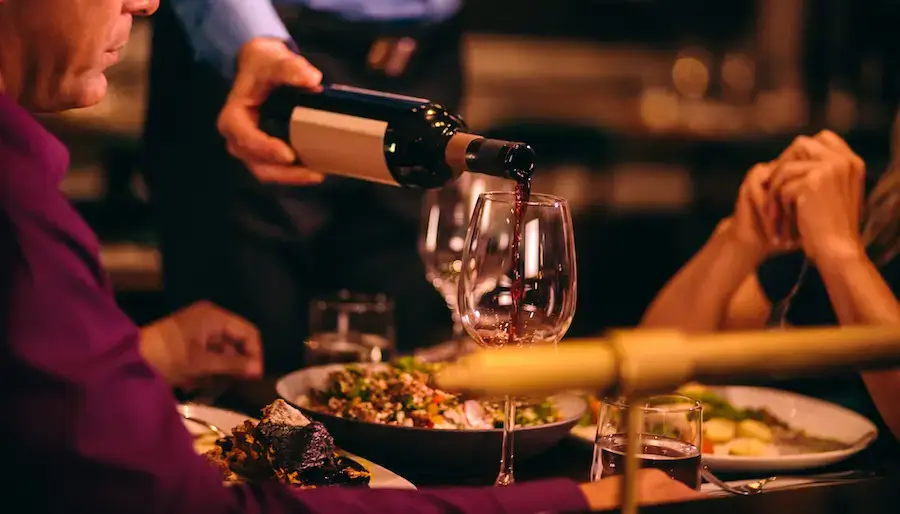
- Hold the bottle at the base and pour smoothly without splashing.
- For still wines, twist the bottle slightly at the end to avoid drips.
- For sparkling wines, pour gently along the inside of the glass to preserve the bubbles.
- Fill glasses only about one-third full – this allows room for swirling and releasing aromas.
Storage During Service
Once open:
- Keep whites and rosés chilled in an ice bucket between pours.
- For reds, if the room is warm, place the bottle back in the fridge for short periods to maintain ideal temperature.
How to Store Wine Once Open
If you don’t finish a bottle, don’t worry – a few tricks help preserve it.
- Reseal tightly with the original cork or a wine stopper. If possible, a vacuum stopper or even inert gas is ideal.
- Store it in the fridge (yes, even reds – cooler temperatures slow oxidation).
- Try to drink within 2-3 days for whites and lighter reds, up to 5 days for fuller styles
For a style-by-style breakdown, read our guide on how long wine lasts once opened.